Author: Joshi Haskell

The Adult Skills of the Montessori Child

Parents often wonder about the extraordinary lessons of Montessori that seem beyond the norm for young children. An example would be the uniqueness of the Botany Cabinet with its eighteen different leaf shapes and exotic names – obcordate, hastate, and reniform. Or the Geometric Cabinet with its 26 different shapes that children master and become conversant with the differences between obtuse angled isosceles triangles and acute angled scalene triangles as well as knowing quadrilaterals, trapezoids and heptagons

  • These exercises develop the adult skills of comparing and contrasting, analyzing and discerning differences while learning the underlying significance of the differences.
  • They learn to understand – not just memorize – what they study then they apply it to the world around them discovering the patterns and constructs that make up their world. It is very common for Montessori children to continue to discover all around them the shapes and contours of their world. A mother once took her three year old into the restroom. She came out shocked as the child had pointed out the quatrefoils in the air freshener.
  • This attention to detail, this analysis continues for a life time. It leads to learning outside of the box, to continually discover the world around you and apply these early-learned skills to resolving the challenges of business, and science and math. It gets applied to art and music and relations and management. It touches and enriches every avenue of life.
  • In the Montessori environment are also the Botany Puzzles and the Zoology Puzzles that bring a “visual dissection” of plants and animals where the child views the components of flowers and leaves and frogs and birds and develops not only an appreciation for detail but for wonder of the world around them.
  • Then there are the globes and the maps with the study of continents and countries with the exploration and knowledge of a great big world. They learn the names of faraway places which in today’s world are no longer far away.
  • The Montessori math experience is one of understanding – not memorization. It goes from the concrete to the abstract of addition and subtraction and multiplication and division. Math becomes, not only a learned skill, but an understood one. And with that comes the comfort and excitement of facing challenges.
  • Montessori children are taught to work for mastery – making mistakes is part of the learning process and success comes at the end of trials and errors. Real life success goes to people who don’t quit until the job is done which is the norm of a Montessori experience.
  • Montessori children develop a large vocabulary that accompanies their amazing breadth of experience and knowledge from within their classroom. It has been shown that one factor of adult success is a large and varied vocabulary.

The Montessori classroom provides a unique and solid base from which children launch themselves into life with the beginning skills of adulthood already in use and waiting to be applied to greater and greater challenges.

 by Edward Fidellow

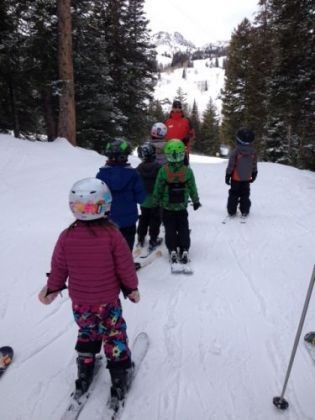
Gearing Up For Winter Sports

Thanks so much for all of your support in helping your student to be prepared for this wonderful opportunity to experience the “Greatest Snow on Earth.”

Remember to clearly label each piece!

Your student must have the following items each week:

  • Skis (& poles if appropriate) or board
  • Ski bag containing the following items:
    • Ski/board boots
    • Helmet
    • Goggles; if you can’t see, you can’t ski or ride!
    • Waterproof & wind resistant, breathable insulated pants and parka
    • Waterproof gloves or mittens
    • Neck gaiter
  • SOCKS are critical. Be sure to provide one pair of socks that fit well, and are NOT cotton (this will make for cold feet!). Imagine wrinkled socks and uncomfortable feet; and be sure your child doesn’t have them.
  • Long underwear
  • Fleece top/sweater
  • 2 face masks

Practise makes Perfect

Letting your student practice packing and wearing their gear will set them up for success and make Winter Sports days fun for everyone! Time spent practising putting gear on and off and carrying it around by themselves will allow your child to be confident, comfortable, and independent.

Registration is Due Now.

Forms can be accessed using this link. ​

The Montessori Transition

A common concern for Montessori parents is how their child will transition out of Montessori into a traditional setting. The question is valid but the concern may be overblown. Yes, there will be transition challenges. Those are an integral part of life – preschool to elementary, elementary to Jr. and Sr. High, to college, to a job, to marriage, to parenthood and on and on.

It is certainly nice if life can remain stable and unchanging (well, maybe not the 2:00 A.M. feedings.) But change is inevitable. The first transition for the Montessori child might tend to be more dramatic than for a child that didn’t have the privilege of attending a Montessori school. However, the ability to handle the change is better developed in the Montessori child.

 The Montessori child has developed coping skills

A traditional setting may not be as stimulating for the Montessori child. It may not offer the same opportunities for independent thought, learning and action. It might be more group oriented. It might be more teacher directed. Yes, it will require transition skills from your child. The good news is – your child has been developing adult coping skills all along in his or her Montessori experience. Even if your child can’t use all of the skills he or she has learned, they will not have gone to waste; they will not be lost. They will surface again and again as they are applied creatively to every day situations.

While non-Montessori students may be waiting for direction and instruction, the Montessori student will take the initiative and begin formatting plans for achievement. Though Montessori students have been raised in a non-competitive environment their training in initiative will give them a head start in competitive environments. Success also comes to the Montessori child because he or she already knows how to work with people; how to cooperate; how to collaborate.

The ultimate success that works in transition is that the Montessori student knows how to finish what she starts and that is not affected by whatever kind of environment she finds herself in. You don’t win unless you finish. Montessori children are great at finishing – and winning.

 The Montessori child takes initiative

There are going to be challenges but the advantage that your Montessori child takes with him or her are worth the minor inconveniences of transition.

by Edward Fidellow, www.crossmountainmedia.com

The Capstone Year in Early Childhood

The Montessori early childhood classroom serves children from the age of 3 to 6 years. Ideally, children spend three years in this classroom. In Montessori, the 3rd year is often referred to as the Capstone Year. This year is equivalent to the traditional Kindergarten year. FMSL strongly recommends that a 3rd year student follows a 5 day schedule so that they can capitalize on all of the learning opportunities open to them in this important year and so they can have enough time to practise and process the year’s curriculum. The final year in early childhood is the harvest year for all the planting and intellectual tending that has gone on for the preceding years in preschool.

The Capstone Harvest
The 3rd year child’s learning explodes into an avalanche of reading and writing and math. All of the earlier preparation (practical life, sensorial) now finds academic outlets. The 3rd year child not only gains a wider breadth of knowledge but a deeper understanding of what they have learned and now is able to use this knowledge to enhance their own intellectual pursuits.

A Montessori education is not just cumulative in its learning; it is exponential in its understanding. The learning that happens in this final year of early childhood is not just adding another year’s knowledge but multiplying what is learned and applying it to what is to come. It is common for Montessori 3rd year graduates to be able to read well (and write) and to understand math far beyond addition and subtraction all the way to multiplication, division and geometry. Maybe even more significantly, the lifetime patterns of responsibility, goal setting, having a work ethic, working through mistakes, inquiry and curiosity are being firmly set.

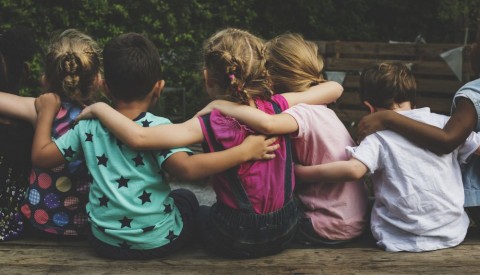
The 3rd year in a Montessori classroom is also the year of mentoring. It is the year when the five year old is able to really help their classmates. This mentoring year is significant for two reasons. First, when you teach others, you really master the subject for yourself. Second, when you are asked to teach you demonstrate your mastery of the material. It is this mastery that produces the profound feelings of self-confidence and assurance that is the hallmark of Montessori students. Real achievement and real achievement demonstrated builds real self-esteem.
To miss this formative year that sets successful life patterns is to miss the ultimate advantage of this unique preschool experience.

Leaving the Montessori program before the capstone year often places a child into an educational setting that is not as advanced; nor one that allows for the initiative that has been carefully cultivated during the earlier preschool years. The child is often introduced to a different curriculum one that lacks the individual intellectual satisfaction that comes from exploring and discovering the wonderful world of learning found in Montessori.The essence of successful life is to be able to make wise choices. The Montessori 3rd year student is at a major threshold of exercising that wise decision making power. To lose that opportunity is to lose a significant part of the hard won success of the preceding years.

Education is not the filling of a pail, but the lighting of a fire.”-  W.B. Yeats

The great gift of an education is not the accumulation of facts and statistics but the lighting of the fire of learning, discovery and joy. It is a gift that Montessori children have the privilege and pleasure of opening and using for a lifetime.

Adapted from The Kindergarten Year in Montessori by Edward Fidellow, www.crossmountainmedia.com

COVID: Heart to Heart

By Jessica Graham, M.D., Pediatric Emergency Physician and Thomas Hanff, M.D., Heart Failure Cardiologist; Current FMSL Parents

​Our gratitude to Jessica and Thomas for providing the following information to our community: MIS-C myocarditis is seen in children after a COVID-19 infection; vaccine-related myocarditis has been described in children after they receive the mRNA vaccine. Which poses the bigger danger for your child?

What is MIS-C?

Multisystem inflammatory syndrome in children is a rare inflammatory condition that occurs in children within 6 weeks after a COVID-19 infection. It can occur even if a child has an asymptomatic infection. This condition can cause inflammation of the skin, eyes, heart, lungs, kidneys, liver, brain and gastrointestinal system. The biggest concern is MIS-C myocarditis, which can cause low blood pressure, dilation of blood vessels in the heart, and a decline in heart function leading to heart failure.a

How common is MIS-C and what age group does it affect?​

Out of every 1 million children who get COVID, about 300 will get MIS-C. MIS-C is most common in children aged 6-10. b

Key points:

  • We don’t know why some children get sick with MIS-C after COVID while others have nota
  • All children with MIS-C need to be treated in the hospital, some in the pediatric ICUa
  • Most kids with MIS-C have excellent outcomesa

What are symptoms of MIS-C?

In addition to ongoing fever, children experience:c

  • Stomach pain
  • Bloodshot eyes
  • Rash
  • Diarrhea
  • Vomiting
  • Dizziness, lightheadedness

What is the treatment for MIS-C?

All children with MIS-C are hospitalized. During hospitalization, they receive serial testing (labs, ECGs, echocardiograms to look at heart). Treatment can include IV fluids, blood pressure support, IVIG (antibodies given through a vein), steroids, and/or biologic medications (powerful drugs that stop inflammation). Most children take daily aspirin and are followed by a cardiologist after hospitalization.a

What is the biggest danger of MIS-C?

In most children, the biggest danger is MIS-C myocarditis. Some children with MIS-C myocarditis have a depressed left ventricular ejection fraction (the heart pumps less blood when it squeezes), some have diastolic dysfunction (the heart does not fill normally between squeezes), and some have coronary artery dilation (the blood vessels that feed heart tissue are dilated/floppy). Almost all children with these findings recover well; however, long-term data is still being collected.

How can I protect my child from MIS-C?

Fortunately, although MIS-C can lead to severe illness, it is still a relatively rare outcome of COVID-19. However, for children of eligible age, vaccination to prevent COVID-19 remains one of the most effective preventive measures. The vaccine also protects against all the other complications of COVID-19, including death and debilitating long-COVID symptoms. In addition, you should continue to take everyday actions to prevent your child and entire household from getting COVID-19.d 

 What is Vaccine Related Myopericarditis?

Myocarditis is inflammation of heart muscle. Pericarditis is inflammation of outer lining of heart. Myopericarditis is when both the heart muscle and the outer lining are inflamed. In the case of vaccine related myopericarditis, the inflammation is thought to be in response to the mRNA COVID vaccine.

How common is vaccine related myopericarditis and what age group does it affect?

Out of 1 million people 16 or older who got the Pfizer vaccine, ~ 20 got COVID-related myopericarditis. e Vaccine related myopericarditis has never been described in a child <12; however, data on mRNA vaccine side effects are still being collected.

Key points:

  • Occurs mostly in male adolescents > 12 years old and young adults
  • Most cases have been described after the second dose of an mRNA vaccine
  • Most cases have occurred within a week of the vaccine
  • Most cases responded well to medicine and rest and felt better quickly
  • Most people return to normal activities after symptoms

What are symptoms of vaccine related myopericarditis?

  • Chest pain
  • Shortness of breath
  • Palpitations
  • Fever

What happens to kids when they have vaccine related myopericarditis and how are they treated?

When vaccine related myopericarditis was first described, all children were hospitalized and observed very closely. Some were treated with supportive care (fluids). Most children never needed any medical interventions. Now, most patients with this condition do not need to stay in the hospital but can be followed outpatient by their doctor.

How can I protect my child from vaccine related myopericarditis?

Your child will not get vaccine related myopericarditis if they do not get the mRNA vaccine. However, if they do not get the vaccine, they would be at higher risk of getting MIS-C or COVID-19

Table: Comparison of MIS-C Related Myocarditis Vs. Vaccine Related Myopericarditisf
MIS-C (149 patients) Vaccine-Related Myopericarditis (9 patients)
​Age ​​Median 7.5 years ​​Median 15.5 years
Sex ​Predominantly male  ​​Predominantly male 
Change in heart function (depressed LVEF)​ 42% of patients  22% of patients
​Discharged on medication for heart ​3% ​none
​Recovery of heart function Full  ​Full

Take-home points:

  • MIS-C myocarditis affects younger patients compared to vaccine related myopericarditisf
  • MIS-C due to COVID is more likely than vaccine-related myopericarditis in the 5-11 age group
  • Children with COVID-19 vaccine-related myopericarditis generally have a milder illness and lower likelihood of cardiac dysfunctionf
  • Children with COVID-19 vaccine-related myopericarditis generally have a more rapid recovery compared to patients with MIS-C myopericarditisf
  • Children are recovering well from both MIS-C and vaccine related myopericarditis
  • Both of the authors plan to vaccinate our children (currently ages 3 and 8 months) as soon as we have the opportunity

 References

a. https://www.rheumatology.org/Portals/0/Files/ACR-COVID-19-Clinical-Guidance-Summary-MIS-C-Hyperinflammation.pdf

b.  Payne AB, Gilani Z, Godfred-Cato S, et al. Incidence of Multisystem Inflammatory Syndrome in Children Among US Persons Infected With SARS-CoV-2. JAMA Netw Open. 2021;4(6):e2116420. doi:10.1001/jamanetworkopen.2021.16420

c.  https://www.cdc.gov/mis/mis-c/hcp/provider-resources/symptoms.pdf

d.  https://www.cdc.gov/mis/mis-c.html

e.  Witberg G et al. Myocarditis after Covid-19 vaccination in a large health care organization. N Engl J Med2021 Oct 6; [e-pub]. (https://doi.org/10.1056/NEJMoa2110737. opens in new tab)

f.  Vaccine-related myocarditis is milder compared to MIS-C (Comparison of MIS-C Related Myocarditis, Classic Viral Myocarditis, and COVID-19 Vaccine related Myocarditis in Children. Trisha Patel, Michael Kelleman, Zachary West, Andrew Peter, Matthew Dove, AreneButto, Matthew E. Oster; medRxiv 2021.10.05.21264581; doi:https://doi.org/10.1101/2021.10.05.21264581)

Re-Enrollment for 2022-23

We are happy and honored that you have entrusted us with your child’s education and look forward to continuing that relationship for the next academic year.

Re-enrollment for 2022-2023 is now open!

Every family should have received an email from enroll@mcsslc.com on 12/15/2021 called Enrollment for Returning Student explaining how to complete the re-enrollment process for the 2022-23 school year. The email was sent to the same parent/guardian who filled out the application & enrollment forms previously.

Open enrollment for new families begins January 14, 2022. We wish to preserve our current families’ spaces by enrolling your children first. Re-enrollment needs to be completed by January 14, 2022. After this date, spaces will be opened to new families and your child’s placement will no longer be guaranteed.

Save the Date/s

​Unable to attend? Don’t worry, recordings were made of these meetings and are available for watching at your convenience. ​​​​​​​​​​​​​​​​​​​​​​​​​​​​​​​​​​​​​​​​

If your child is eligible to move into a new program next fall, please consider attending the pertinent informational meeting about that transition. Parents of rising students will receive an email invitation to a virtual meeting for the following date/s:

  • Entering Lower and Upper Elementary 12/2/21, 6:30-7:30pm
  • Entering Early Childhood 12/9/21, 6:30-7:30pm
  • Entering Toddlers 12/15/21, 6:30-7:30pm

Enrollment details to note for 2022-2023 include the following:

  • The tuition increase this year is 6% school wide.
  • If you are considering the Extended Day option, we would encourage you to sign up sooner rather than later. Staffing is based on those who have selected this option during enrollment and we cannot always guarantee space for later schedule changes.
  • Registration and enrollment for Summer Camp 2023 will be conducted in late fall 2022.

If your child will not be returning for the 2022-2023 year, please email enroll@mcsslc.com to indicate your decision. Alternatively, log into FACTS Family Portal and click Apply/Enroll -> Enrollment / Re-enrollment and click the button “Will Not Enroll.”

If your family has elected not to return to FMSL next year, we recommend that you wait to relay that information to your child until closer to the end of the academic year. It has been our experience that children who are told in advance of such a change often lose their focus for the balance of the year, and begin the process of separation long before the change is imminent.

We understand that educational decisions are the result of a thoughtful, intentional process and we appreciate our families taking the time when they are considering re-enrollment for another school year. Do not hesitate to contact the Director of Admissions, Ramira Alamilla, at enroll@mcsslc.com if you have any questions or need assistance in this process.

Holiday Gift Giving Project 2021

Each year FMSL looks for local charities to support as an opportunity for our entire community to participate in service learning projects. This year we have chosen to give to the IRC, The INN Between, and the Salvation Army. There are two ways to give this year:

  • Sign up for an item and bring it to the school (unwrapped) by December 10
  • Contribute financially to our sister nonprofit MEF and we will purchase items to give.

All items must be dropped off to the main entrance of the school by December 10. If you are unsure that you can get one of the items on the list by this time, please consider a financial donation so we may purchase items on the list.

  • The IRC is an organization that supports refugee families through a program called Light One Candle. This year we are supporting the Zarifi family of 8 from Afghanistan. The 6 children are ages 3 to 17. If you would rather make a monetary donation toward this cause you can donate here.
  • The Inn Between provides a safe refuge and dignified end of life care for the homeless here in Salt Lake City.
  • The Salvation Army is an international organization dedicated to meeting human needs without judgement.
  • MEF or Montessori Educational Foundation is the Foothill Montessori of Salt Lake’s sister nonprofit charged with various service learning and giving projects.​

If you have donated in-kind or financially please use the following donation receipt for your tax purposes.

Winter Sports 2022

​FMSL partners with a local resort each year to allow our students a region specific experience of ski and snowboard lessons. This year, our Winter Sports Program will take place at Snowbird- January 12th, 19th, 26th, February 2nd and 9th. Students K-6th Grade are eligible to participate in Winter Sports and are automatically enrolled in the program.

Registration & Payment:

All eligible students will automatically be billed for Winter Sports- $350 for Kindergarten aged students and $325 for elementary aged students. The afore mentioned amount/s will be added to your FACTS incidental account. If your child will not be participating in Winter Sports please email Sabine at sabinebell@mcsslc.com to ensure that you are not billed.

Expectations:

Please note the following expectations to help your child be ready to participate in the Winter Sports Program:

  • Respect, grace and courtesy are expected at all times.
  • Students are responsible for being prepared each week for Winter Sports.
  • Students are expected to carry and keep track of their belongings and equipment.
  • On the bus, students need to sit in their assigned seats and speak quietly with their seatmate.
  • Students must stay with their group, listen and follow directions.

If a student is disrespectful, fails to adjust their behavior, or disregards directions, they will be asked to sit out. Depending on the severity of the situation, they may be asked to miss the next lesson. No refunds will be offered.

Equipment:

It is recommended that you start looking into booking rentals for your student. When borrowing equipment from family or friends, be sure to have your child’s gear checked by a reputable shop. Children grow very quickly, so double check that their clothes and equipment fit them correctly. A list of swaps and shops can be found here.

Chaperones:

Chaperoning during Winter Sports is a great way to get your Parent Volunteer Hours in. It is also challenging, rewarding, and a lot of fun! Please review the guidelines and expectations linked here and if you are willing to commit we ask that you sign up by completing this short Google form.

The recording of the recent Information Meeting can be found here.

Courage

The Montessori classroom provides daily opportunities to develop and practice courage.

It is amazing to observe the breadth of accomplishment that a Montessori environment fosters. Courage is not traditionally thought of as an educational outcome but then again Montessori is not traditional. For children, courage is the ability to try new things even if they are afraid and as they mature courage becomes the ability to do what is right and to do what is good.

For a child everything is new. That is the reality of childhood. The awesome task and purpose of childhood is to create the adult. Life takes courage to navigate and to become a fully functioning independent adult. It is this kind of courage that must be nurtured and practiced for it to become a practical virtue.

The courage to do what is right

We tend to identify courage with physical courage – running into a burning building, pulling people out of rivers etc. However, in real life every day common courage demonstrates itself in intellectual, emotional and spiritual settings. The courage to do what is right, to do what is good for others, to use our gifts, talents and opportunities well and wisely is the kind of courage practiced and displayed in a Montessori environment.

We well understand that the opposite of courage is fear. But for a child fear doesn’t yet have a definition. It is represented by an indistinct but palpable feeling of unease. For a child fear is “defined” by the unknown, the unfamiliar. (That is why Montessori children love and are so at home in their environments because of its constant sameness and familiarity.)

For the child, conscious fear starts from the unknown – the dog, the dark, strangers and then becomes attached to the inability (and frustration) of not being able to handle and control the environment – bringing it back to sameness. (Perfectionist children come to this earlier than others.) Then this fear attaches itself to the perceived rejection that comes from disapproval. The child, unconsciously thinks, that if I only do what is absolutely safe or what receives guaranteed adult approval I don’t have any reason to fear or face disapproval.

A sense of accomplishment and control

One of the hardest concepts for a new Montessori teacher to understand (and embrace) is that of not correcting children in the middle of their work. (This is particularly difficult for perfectionists and controllers.) Unless the child is damaging the material or endangering others or himself or being rude you let them continue. There are two outcomes to not correcting the child in the midst of the work. One, the child discovers his own mistake and corrects it which produces a sense of accomplishment and control. The second outcome is far more subtle. Because you are not corrected at every turn, you do not freeze up; you do not constantly look over your shoulder; you are not waiting for the next shoe to drop. You gain breathing room to make mistakes – that’s how we learn. In this way mistakes do not become the end of the universe or the world as we know it. The child is willing to try something new (which is an act of courage) without being weighed down with the fear of failure or reproof.

Not being corrected (all of the time) is the strange and unique Montessori training ground for courage. In trying something new the child gets to practice courage every day. Eventually, the child becomes used to trying new things without the overpowering fear of failure. The child learns to work their way through mistakes which becomes a normal part of life and the learning process – which is a significant part of adult life.

Life requires courage to live fully. The Montessori classroom provides daily opportunities to develop and practice courage.

 by Edward Fidellow, www.crossmountainmedia.com

Our Response to a Recent News Event Involving a Utah School.

We are upset and deeply saddened by the events that took place at Maria Montessori Academy, a public charter school, in North Ogden. FMSL advocates for peace and tolerance. We are committed to providing a curriculum that embraces justice, diversity and equity; this includes teaching Black history in age appropriate ways. As members of the Utah Montessori Council we are actively working with our fellow educators to provide guidance and training that will ensure environments where everyone is welcome, valued and respected. We invite you to read this article from the New York Times to see what transpired. – Brandi & Margaret