Author: Joshi Haskell

Parent Teacher Conferences are coming up quickly!

Parent Teacher Conferences will be held on Friday, February 4, 2022. Progress Reports will be published in Compass prior to conferencing. Please note, all conferences will be virtual. The process to sign-up for a time slot will be shared with you soon.

Helpful tips to make the most of your conference:

  • Be prepared. Write down questions or things you would like to discuss and email the teachers with your questions before the conference.
  • Confer with your child. Ask your child if there is anything they would like you to discuss with the teachers.
  • Use your time carefully. Keep the conference focused on the child and the purpose of the conference.
  • Listen and share. Be open to suggestions from the teacher and be prepared to share suggestions of your own. No one knows your child like you know them.
  • Ask for clarification. If you are unclear about what the teacher is telling you about your child, ask for specific examples. Remember that you and the teachers are a team and your main focus is meeting the needs of your child.
  • Write it down. Take notes so you can share information with your child after the meeting.
  • Keep the teacher informed. Things happening at home often affect children’s behavior and performance at school.
  • Summarize. At the end, make sure that everyone understands what was talked about and what they have committed to do.
  • Follow up. If you have items that need to be followed up on, establish a check-in date.

Please note, the school and office are closed on all PTC days.

On-site Testing Has Begun

The first day of on-site COVID testing went smoothly. 25 students were selected for this first round of randomized testing; 3 of the 25 were unable to attend; 2 were a no-show. With advance knowledge of the absent students, Margaret selected 2 individuals to take the available slots. In total, 21 tests were conducted on students ranging from toddlers to sixth grade. One staff member was selected for testing. As previously reported, all tests had negative results. Phew!

The students were awesome. They lined up patiently to await their turn, listened very carefully to the directions and cooperated fully with all involved. Several of the upper elementary students were amongst the first tested and remarked they had lost count of the number of COVID tests they had already completed. Their confidence/nonchalance helped set the tone for the session. A life-sized, plush rainbow trout accompanied a 1st year lower elementary student and was a great diversion to those awaiting their turn. Kudos to the students who gently helped and supported those who were a little nervous. One lower elementary student was overheard explaining to an early childhood student that it [nasal swab] was comparable to the sensation experienced when picking your nose!

This success of the event was due in no small part to the parents who volunteered their time to make this possible.

  • Words cannot do justice to the gratitude we feel for those on the Test Team who helped research and implement the program. Simply said, thank you Elena, Tera, Matthew and Sophie.
  • In addition, we are grateful to Eyal for reaching out and offering to conduct the selection of students for each week’s randomized testing.
  • And lastly but by no means least, our heartfelt appreciation to the parents who showed up to conduct the first test session. Set up, swabbing, timing and reading of tests, and clean up was conducted with very careful attention to detail.

The Test Team met on 1/6/22 to discuss the possibility of expanding our testing capabilities to include a Test-to-Stay option. This was recently proposed by the CDC as an alternative to quarantine in an effort to keep students attending in-person school. Several members of our community have also enquired about the possibility of FMSL providing Day 5 testing (the recommended testing date for those exposed to COVID-19). Both options require more research and consideration. The community will be updated on developments in either of these areas.

We currently have 64.28% of those eligible to participate registered in the program. Registration for testing remains open.

Bathroom Independence in the Early Childhood Program

All children entering the Early Childhood Program should be bathroom independent. This means that they can handle bathroom related tasks with little or no assistance.

We expect:

  • Children entering the EC classroom have had a good deal of experience listening to the cues of their body as to when it is time to go to the bathroom.
  • Children have had experience dressing and undressing themselves.
  • Children have been taught how to handle basic toilet hygiene. This includes- wiping, flushing and handwashing.
  • Children are using a regular restroom toliet and not a training potty.

Why does my child need to be bathroom independent?

Our Early Childhood classrooms are not equipped to have children enrolled in our program in diapers or pull ups. We do not have changing tables or cleaning supplies for diapering in these environments. EC classrooms are not staffed to allow for students to be provided a great deal of assistance in the bathroom.

How do I tell if my child is bathroom independent?

​If your child is staying in the same cloth underwear and clothing all day long, 4 out of 5 days per week, and they are independently recognizing the need to go to the bathroom a majority of the time, they are considered bathroom independent.

If your child does not initiate going to the bathroom most of the time and is having at least one accident a day or is not using the toilet for urine/BMs, it is best to wait until they are ready.

 Accidents happen…

We do anticipate that in a new environment some children will have some mishaps. Students are given lessons on how to handle bathroom accidents. Children are never shamed; the accident is handled in a matter of fact and practical way.

If regression in bathroom independence occurs, a gradual transition to school can be considered. A half day or reduced hours may help support the child to transition into the school routine and become fully independent in no time.

What if…

What if my child is not bathroom independent and is having multiple accidents throughout the day? The child’s start date will need to be delayed until your child is ready to be in the classroom.

Tips for gaining bathroom independence:

  • Stay near home or a toilet during this transitional time. If you are not consistent, you can slow the process to the point of regression.
  • Read interesting and relaxing books while they are sitting on the toilet.
  • Be consistent: once you decide to make the transition from diapers to underwear do not go back. Pull-ups serve the same purpose as diapers and should only be used overnight when children cannot control bodily functions while asleep.
  • Set a timer for 15 minutes, 20 minutes, 30 minutes, etc. When the timer goes off say, “It is time to go to the bathroom,” and “Even if you don’t have to go, you can still try.” Lengthen the time as your child is successful with the shorter times.

Additional Resources:

**Adapted from Mandala Montessori 

Admissions Meeting: Jan. 11 – 6:30pm

Join Meeting (offline)

This event will be virtual. The “Join Meeting” button above will connect you on the day of the event:

  • When: Tuesday, January 11, 2022 from 6:30-7:30pm.
  • Enrollment Opens for 2022-2023: January 14, 2022.
  • How to RSVP: Families interested in attending should begin by filling out the Admissions Inquiry form if not already done.
  • Rolling Admissions: Parent interviews will be scheduled in the order in which applications are received. This event is a required step for beginning the application process and will count as a tour while we observe COVID-19 safety protocols.

Foothill Montessori of Salt Lake City serves children aged 3 months through 6th grade. Our mission is to provide an authentic Montessori experience that nurtures the natural unfolding of the whole individual, instills a love of learning, encourages acts of peace, and empowers all.

One of the great strengths of our school is its community of parents, students, and staff. We appreciate and are grateful for the word of mouth referrals by our current families and ask that you pass the information along to friends and/or family interested in Montessori education.

General Admissions Information Meeting: January 11, 2022, 6:30pm – Facebook Event

Please share this event on Facebook with friends or family.

Upgrading our Masks

Erin Lipovich is the parent of a Wasatch student, and an avid researcher. She has kindly compiled the following information to help the community source quality masks. Thanks Erin!

The cloth masks recommended earlier in the pandemic helped prevent those infected from spreading covid-19. Today, with more highly contagious variants spreading, medical personnel are urging everyone to upgrade from cloth to more protective masks that also keep the wearer safe.

Masks certified as N95 (USA), KN95 (China), KF94 (Korea), or FPP2 (Europe) have been tested and proven to filter out >94% of all aerosols, including airborne viruses such as covid-19. Unfortunately, sources like Amazon are overrun with fakes, making it best to buy your masks from reliable sources.

  • The N95 Project – a non-profit dedicated to providing access to trustworthy personal protective equipment – only sells masks guaranteed to be genuine.
  • Bona Fide Masks, as the name suggests, only sells masks that have been certified as genuine and is the sole US distributor of Powecom Brand KN95 masks.
  • Armbrust is a manufacturing company in Texas that sells masks “designed, developed and made in the USA.” Wanting to help people find trustworthy masks wherever they can, the company has made their extensive testing database public and searchable.
  • Aaron Collins, an aerosol expert known to the internet as Mask Nerd, has been testing masks since the start of the pandemic. His results, found HERE, have a special section on masks for children. He also has a YouTube channel.

As we enter year three of the pandemic, working together and following best practices will help keep our community as safe as possible.

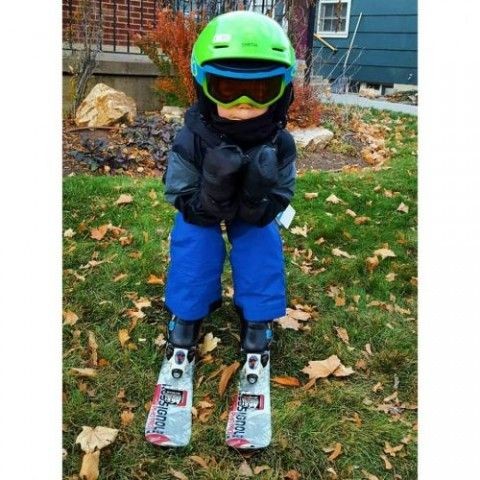
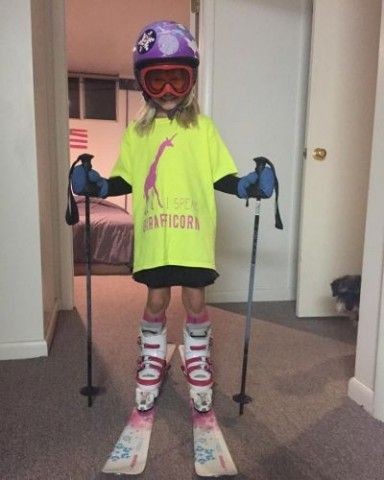
Winter Sports Starts January 12, 2022!

Winter Sports 2015

The Winter Sports program at FMSL started back in 1994, spearheaded by our very own Brandi Alllen. Brandi, a former ski instructor, was very much involved in the program in those formative years and is delighted to see how it has grown and expanded since then.

Winter Sports 2015

This year we were fortunate to have our safety measures and the overall preparation for Winter Sports reviewed by Peter Girardi. We are so very grateful for his advice and guidance. Peter is a coach with Valvoline Racing, a private ski team, traveling for Nor-ams and European race and training projects. Prior to that he was on the Men’s Alpine staff at Killington Mountain School in Vermont. He was also part of the Student Life department and helped write the Covid-19 Response for the school. He is the proud parent of Theo in Sego Lily (Infant Class).

Winter Sports 2017

The intent behind our Winter Sports Program is that the experience as a whole lets our students have a real-life group driven opportunity to practice the life skills they have been learning and practicing in such a safe environment here at FMSL. And it is an opportunity to let our students explore one of Utah’s greatest beauties- the mountains and our incredible snow!

Winter Sports 2019

One of the reasons we appreciate Snowbird’s Ski Program is that they take an approach to individualized instruction that is similar to our approach here at FMSL. Snowbird instructors go through intense training on how to meet the needs of each student in a group. Please keep in mind that these lessons are peer-oriented and groups are bound to contain students at varying levels of mastery in the skill sets being worked on. Some students will be close to the peak of that skill set and some will be further down. We ask that you place your trust in the ski program to group our students as they see fit. As these lessons continue on, it really is a collaboration as a group to learn and practice.

Have a Wonderful Winter Break

Brandi and I wish you and yours a safe and restorative Winter Break. 2020 has been challenging to say the least yet we are so very grateful to have had such a wonderful community with which to face the challenges. On behalf of Robyn, and all the staff, we want you to know that we greatly appreciate your support and partnership. You have made this school year possible. See you in 2021!

Brandi & Margaret

Holiday cheer from the on-site crew of Cherie, Brandi, Sabine, Margaret, Jemmyn, Candace, Nanette, Lian and Felipe

What is the Capstone Year and why does my child deserve to have one?

We often refer to the 3rd year a child is in a Montessori program as the Capstone Year. But what is it that really makes the year so special and important? We invite parents of our current 2nd year students in Early Childhood and Lower Elementary and 4th year students in Upper Elementary to consider the following reasons we recommend providing your child with their Capstone Year.

Reasons to Stay:

  • Is your child learning, happy, and engaged? If so, consider yourself lucky. Why tinker with a winning situation when so many other families are frustrated or disappointed with their child’s school experience.
  • Your child has waited for two years to be a leader in their class. The third year students are looked up to as role models for the younger students, and most children eagerly await their opportunity to play this role.
  • The third year is the time when many of the earlier lessons come together and become a permanent part of the child’s understanding. Leaving early means many of the still forming concepts evaporate.
  • As a leader in the class, your child has many opportunities to teach the younger children lessons that they learned when they were their age. Research proves that this experience has powerful benefits for both tutor and tutoree.
  • Third Year Montessori children normally go on to still more fascinating lessons and more advanced Montessori materials. The natural process of abstraction or critical thinking around familiar concepts materializes naturally and gears the child up for more advanced skills.
  • The Montessori curriculum is more sophisticated than that found in traditional programs.

  • Having spent two years together, your child’s teachers know the students very, very well. They know their strengths and areas that are presenting challenges. 3rd years can begin the year strong, without having to build a relationship of trust with the teacher.
  • Your child already knows most of their classmates. They have grown up in a safe, supportive classroom setting. They are learning appropriate social boundaries and interactions with a group of familiar peers.
  • Montessori math is based on the European tradition of unified mathematics. Montessori introduces young children to basic geometry and other sophisticated concepts as early as kindergarten. Our spiraling curriculum means students will revisit these skills and build on them throughout their elementary experience.
  • Third Years have a real sense of running their classroom community, an important leadership skill that goes on with them.
  • In Montessori, your child can continue to progress at their own pace. In traditional education, they may have to wait while the other children begin to catch up or will be forced to move ahead before they are ready.

  • Beginning as early as kindergarten and continuing through elementary, Montessori children are studying cultural geography and beginning to grow into global citizens.
  • In Montessori, students work with intriguing learning materials instead of preprinted work books, allowing a student to work on a skill for the right amount of time for their own understanding and not by a predetermined timeline.
  • Your child has been treated with deep respect as a unique individual. The 3rd year student is ready and able to recognize and reciprocate this respect and contribute to the culture of the school and their community.
  • Montessori schools are warm and supportive communities of students, teachers, and parents. Children can’t easily slip through the cracks!
  • Montessori consciously teaches children to be kind and peaceful.

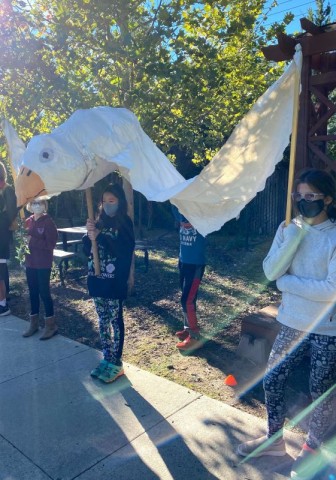
The Capstone Year in Upper Elementary- 6th year students carry the peace dove in our annual walk on International Day of Peace.
  • In Montessori schools, learning is not focused on rote drill and memorization. Our goal is to develop students who really understand their schoolwork.
  • Montessori students learn through hands-on experience, investigation, and research. They become actively engaged in their studies, rather than passively waiting to be spoon-fed.
  • Montessori is consciously designed to recognize and address different learning styles, helping students learn to study most effectively.
  • Montessori challenges and set high expectations for all students not only a special few.
  • Montessori students develop self-discipline and an internal sense of purpose and motivation.

Three, six, nine and twelve years old are natural transitional ages for children. They are the best time for children to move to new classrooms or schools.

While the reasons to leave can be compelling and are worth every consideration, we believe the reasons to stay are worth your careful and thoughtful consideration.

(Adapted from Tim Seldin’s 25 Reasons to Keep Your Child in Montessori Through the Kindergarten Year, Tomorrow’s Child.)

COVID-19 Vaccination in Children 5-11 years of Age

By Jessica Graham, M.D., Pediatric Emergency Physician, FMSL Parent and Thomas Hanff, M.D., Heart Failure Cardiologist, FMSL Parent

Pfizer recently performed an mRNA vaccine trial in children aged 5-11. After study results were released, an emergency use authorization (EUA) was approved for children in this age range. However, some parents still have questions or concerns.

Reason for Hesitation Facts About COVID-19 and Vaccination
COVID infection is mild in most kids. ​The Delta surge has increased hospitalization five-fold among childrena
8300 kids 5-11 have been hospitalized due to COVID-19b,c
30% of kids hospitalized with COVID-19 had no underlying health conditionsb
172 kids aged 5-11 have died from COVID-19 b
2316 kids aged 5-11 have developed MIS-C after COVID-19
2% of kids who get COVID experience post-acute “long-COVID” sequelae
d
I’m concerned the vaccine will cause my child to have myocarditis. There were zero cases of myocarditis in Pfizer’s mRNA vaccine trials in kids aged 5-11e*
When they occur in older children, the cardiac effects of the COVID virus and MIS-C are more severe than those from the vaccinef 
I think I’ll just wait to see how other kids do. ​Utah’s COVID-19 numbers are still high, with holidays coming up and your child in school, there is a chance they would get COVID while waiting to see what happens to kids getting vaccine
Getting vaccinated helps keep vulnerable members of the community (babies, immunocompromised, those who cannot get vaccinated) safec
I don’t want to negatively affect my child’s fertility. There is no evidence that the COViD-19 vaccine causes fertility problemsg
I don’t want my kid to have to suffer from the side effects. ​The CDC recommends vaccination in children who have had SARS-CoV-2 infectionc
Antibody responses to immunization are generally more robust and predictable, and potentially longer lasting, than natural immunity from the infection
My child is really good at wearing a mask. Masks are very helpful at helping prevent infection, but not perfect, especially when infected people aren’t wearing themh
I looked at the Vaccine Adverse Event Reporting System and saw some scary side effects . VAERS is solely a place for people to report things that happen around the time when they get the vaccine; it does not guarantee causationi
I’m concerned the vaccine may alter my child’s DNA. COVID-19 vaccines do not change or interact with DNA in any wayi
The vaccine development and testing process was rushed. Coronavirus and mRNA vaccines have been studied and developed for over 2 decadesj
I plan to wait until my 11-year-old is 12 so they can get the higher dose. The lower dose led to just as robust an immune response with fewer side effectsk

Trial Detailsl

  • Trial included ~3100 children
  • Children received 10-mcg dose (1/3 the adult dose)
  • Vaccine efficacy 91% (high compared with many other vaccines)

*In older children (16-29 years), the incidence of myopericarditis after vaccine is 1 per 5,750. Therefore, it is possible that because even if myopericarditis were going to occur at the same rate in the 5-11 age group, the trial would not pick it up because the total number of children in the trial was less than this.

However:

  • Most cases of myopericarditis have occurred between 16-29 years; Rates of myopericarditis after vaccination are much lower in the 12-15 year age group in studies done in Israel and the U.S
  • It is hypothesized that the lower dose used in children 5-11 is less likely to cause myocarditis
  • In general, the incidence of myocarditis from other causes is lower in this age groupf; myocarditis mostly happens in post-pubertal kids
  • Even if it does occur, the cases of myopericarditis have overall been mild and children have recovered well

Our gratitude to Jessica and Thomas for writing this very helpful article.

References

https://www.cdc.gov/mmwr/volumes/70/wr/mm7036e2.htm

https://www.cdc.gov/vaccines/acip/meetings/downloads/slides-2021-11-2-3/03-COVID-Jefferson-508.pdf

https://www.cdc.gov/coronavirus/2019-ncov/vaccines/recommendations/children-teens.html

https://secure.jbs.elsevierhealth.com/action/getSharedSiteSession?redirect=https%3A%2F%2Fwww.thelancet.com%2Fjournals%2Flanchi%2Farticle%2FPIIS2352-4642%2821%2900198-X%2Ffulltext&rc=0

https://publications.aap.org/aapnews/news/17751/FDA-panel-Benefits-of-COVID-19-vaccine-for-ages-5?autologincheck=redirected

f Vaccine-related myocarditis is milder compared to MIS-C (Comparison of MIS-C Related Myocarditis, Classic Viral Myocarditis, and COVID-19 Vaccine related Myocarditis in Children. Trisha Patel, Michael Kelleman, Zachary West, Andrew Peter, Matthew Dove, AreneButto, Matthew E. Oster; medRxiv 2021.10.05.21264581; doi:https://doi.org/10.1101/2021.10.05.21264581)

https://www.cdc.gov/coronavirus/2019-ncov/vaccines/planning-for-pregnancy.html

h https://publichealth.jhu.edu/2021/the-long-history-of-mrna-vaccines

An evidence review of face masks against COVID-19, Jeremy Howard, Austin Huang, Zhiyuan Li, Zeynep Tufekci, Vladimir Zdimal, Helene-Mari van der Westhuizen, Arne von Delft, Amy Price, Lex Fridman, Lei-Han Tang, Viola Tang, Gregory L. Watson, Christina E. Bax, ReshamaShaikh, Frederik Questier, Danny Hernandez, Larry F. Chu, Christina M.Ramirez, Anne W. Rimoin. Proceedings of the National Academy of Sciences Jan 2021, 118 (4) e2014564118; DOI:10.1073/pnas.2014564118

https://www.cdc.gov/coronavirus/2019-ncov/vaccines/facts.html

j https://publichealth.jhu.edu/2021/the-long-history-of-mrna-vaccines

k https://www.healthline.com/health-news/should-11-year-olds-wait-until-they-are-12-to-get-a-covid-19-vaccine

l https://www.fda.gov/news-events/press-announcements/fda-authorizes-pfizer-biontech-covid-19-vaccine-emergency-use-children-5-through-11-years-age