Author: Alejandro Malespin

2017 Admissions Information Meeting – New Students

Thursday, January 19th, 2017
Meeting starts promptly at 6:30pm
Adults only – sorry, no child care provided
Bring a friend!

Montessori Community School will be hosting an Admissions Information Meeting for all adults interested in learning more about any of our programs for 2017-2018 Admissions. Parents are invited to join us for a presentation about Montessori method, curriculum and philosophy and how they are implemented in our program to educate the whole child. Then, visit individual classrooms to learn more about each program and to meet and greet with our administrative and teaching staff.

2017-2018 Application Packets will be available.

Montessori Community School serves children aged 18 months through 6th grade and we offer an extended day program, 7:30am – 6:00pm. Confirm your attendance or interest in coming on our Facebook event.

Montessori Community School’s mission is to provide a rich, individualized educational experience, which guides and nurtures the natural unfolding of the whole individual and inspires a lifetime love of learning and peace.

Winter Camp 2016 – Wild Utah

This year’s Winter Camp theme is Wild Utah. The students will have amazing opportunities to learn about animals of Utah through a lot of fun activities including animal track and scat identification, creating animal tracks, handling real pelts and skulls, and, of course, a lot of arts and crafts.

A Few Reminders:

  • The doors do not open until 8:00 am and camp also closes at 5:30 pm. Please be mindful of these times. Plan to be at the school no later than 5:25 pm to ensure there are no late pick-ups. -Late Pick-Up Fees will apply.
  • Ensure your child brings the following items to camp:  winter attire, a lunch from home, and a change of clothes (for Toddler and Early Childhood students). If your child takes naps, please provide a blanket.
  • Make sure that your child brings appropriate clothing for any weather, as we will go outside whenever the weather permits.

We look forward to providing a fun filled winter break for your students.If you have any questions about camp, please email alexandradelanty@mcsslc.com. We look forward to providing a fun filled winter break for your students.

Click here for a camp schedule.

Toys and the Boxes They Come In

“Whatever do you think they’ll do with all those boxes? Well…” —Min Flyte, Box

You’re thrilled with the gift you’ve chosen for your toddler, and you can’t wait to see her open it up. She takes forever tearing off the paper, and becomes enchanted with the ribbon and wrappings. You help navigate the opening of the box and express your excitement over the surprise inside. She explores the gift for a minute or two, and then returns to the paper, ribbons, and empty box and spends the next half hour discovering all their possibilities.

It Doesn’t Take Much

A young child doesn’t need much to become engaged with the world. Children can spend hours playing with the simplest items. They love empty boxes that might hold their treasures. Ribbons, paper, string, and tape are perfect for creating whatever they might imagine.I recall seeing young neighbors having a grand time with the runoff from a rain shower, along with a stick, a few rocks, and a piece of string. First, they watched the string float down the stream, and then did the same with the stick. Next, a few rocks dammed up the flow and the string floated in the pool until the water flowed over the dam. A leaf came down onto the pool which was picked up by one of the children who pierced it with the stick. It floated like a little boat down the stream until it got stuck against the rocks. I watched these budding engineers for fifteen minutes, but I’m guessing they continued to play for a long while after I left.

Consider a Box

What can you do with a box? Of course it depends on its size and thickness. Many a game or activity await, and here are a few ideas:

Play catch. Toss a beanbag or a paper ball into the box, and continue to move further away. This can be a solitary or group game.

Open up two ends of a long box and roll a ball through the tunnel.

Lift a toddler inside a big corrugated box with a crayon or two in-hand, and watch time fly as she decorates each wall.

Play a game of peek-a-boo when the box is big enough for a child to hide in or small enough to fit over someone’s head.

Several boxes can be put together to make a skyscraper or doll house.

With a little handiwork, a box can become a car, a firetruck, an airplane – and be wearable, too!
Cut out the bottom and top, draw or paint the sides accordingly, and then attach ribbons to go over your child’s shoulders.

Give your child a plain gift box and some crayons or markers – then discover what he creates.

Use a sturdy gift box without its lid to hold an activity for your child, like two small pitchers, one filled with rice, to practice pouring.

An appliance box will give children endless options for play. It might become a secret quiet place, a fort, or a garage for the scooter, wagon, and wheelbarrow.

Classic Toys Come In Boxes

Some toys are as basic as the boxes they come in. A kaleidoscope, a magnifying glass, a small wagon, or a top never go out-of-date. Children love the wooden “work bench” pounding toy. A substantial set of wooden blocks will be used by your children for years to come. When your children are older, they can use the same blocks to engineer more complex structures such as airports and towns.

Create a treasure hunt by placing a ball, yo-yo, or little book in the smallest of several graduated sized boxes. Consider pairing a doll or stuffed animal with a favorite childhood book – for example, a plush bear and Winnie the Pooh. Children like to string beads, stick stickers, play hopscotch, and paint.

A young child can spend hours playing with a simple box. There’s really no need for toys that have all the “bells and whistles,” and batteries. With such toys – and screens – children become passive watchers instead of active creators. A deck of cards is always welcome. When was the last time you played Crazy Eights or Go Fish? You can teach your child to play a simple game of solitaire, too.

What was your favorite toy? A doll house? A jack-in-the-box? An erector set? A baby doll? Lincoln Logs? Tonka trucks? Whatever the gift you choose to give, the box it comes in is often a source of more delight than we could ever imagine.

—by Jane M. Jacobs, M.A., Montessori Educational Consultant at Montessori Services. She is a trained primary Montessori directress and also a Licensed Marriage and Family Therapist. She has taught children aged 2 to 7 years in Montessori schools, Headstart, and also in a preschool for children with developmental challenges. In her counseling practice, she helps individuals, couples, and families.

Article from Small Hands, A Resource for Families.

How to Emotionally Prepare Your Student for a Future Event

There is a power in preparing for future events by devising solutions and strategies for goals rather than emphasizing, simply, avoiding problems.

For example, having students identify what their best hopes are for their behavior during a field trip and asking them to identify those hopes in specific detail. If the student is unable to come up with their “best hope” we can ask them to think about what their teacher or parent would likely say if asked that question.

If you have a particular student anticipated in having more trouble than another, you could meet with a parent and/or teacher so they can hear the opinion of that other person word for word.

The following is how our school plans to approach students in preparation for Winter Sports and we suggest parents take a similar approach as you start engaging in conversations about the Winter Sports Program and the ski/ snowboard lessons.

Sample Situation 1:

Teacher/ Administration/ Parent:
Student, what are your best hopes for your behavior during winter sports (future event) this week?

Student: 
I will behave myself/ act good/ some other generic response.

Teacher/ Administration/ Parent:
So, if you were behaving yourself/ acting good (student’s words) during winter sports (future event) this week, what would that look like? (student response) What would your ski instructor notice/see you doing? (student response)

[We are looking for specific behaviors here, with as much detail as possible. We also want these behaviors to be positively worded (so it’s not an absence of some negative behavior, it’s the presence of a positive behavior we are focusing on).]

Teacher/ Administration/ Parent:
So, let’s say that you were able to meet your best hopes. You _________, __________, and ____________ (list positive behaviors they identified they will display). If you did all those things during winter sports this week, what difference would that make?

After each future event, you want to help the student reflect on what went well (so we can do more of what works).

Sample Situation 2:

Teacher/ Administration/ Parent:
Student, what are your best hopes for your behavior during winter sports (future event) this week?

Student: 
I don’t know.

Teacher/ Administration/ Parent:
Ok, well, what do you think your teacher would say? What do they hope to see from you during winter sports?

[You are looking for a specific behavior here, with as much detail as possible. We also want these behaviors to be positively worded (so it’s not an absence of some negative behavior, it’s the presence of a positive behavior we are focusing on).]

Student:
Um, the want me to ski well.

Teacher/ Administration/ Parent:
Ok, so if you were skiing well, what would that look like? [Student gives a description of turning, skiing not too fast etc.]

And what else do you need to do in order to ski well? Are there other things that you should be doing in your lessons to help you ski your best? [Leading into positive behaviors such as listening, following instructions, controlling their body, etc.]

So, let’s say that you were able to meet your best hopes. You ______________, ___________, and _______________ (list positive behaviors they identified they will display). If you did all those things during winter sports this week, what difference would that make?

After each future event we want to help the student reflect on what went well (so we can do more of what works). Help the student process the event. If an amends are in order consider having the student write an apology letter reflecting on the behavior,  and perhaps how that behavior made you and other feel. This will help the student connect their behavior to environmental facets (you, instructors, other students etc).

This information was advised by school psychologist, Dr. Melissa DeVries.

Our Grandmothers We Sponsor

As many of you know, Montessori Community School sponsors two grandmothers through the Adopt-A-Native-Elder Program. This year, our 3rd Year Lower and 5th Year Upper Elementary students were able to attend the Navajo Rug Show at Deer Valley Resort in November.

In November, we did a light food, clothing, and supply drive for our Elders. However, each year around the holidays, we are able to send more directly to our grandmothers, Elvira Horseherder, and Anita Jackson.

Funds raised during our annual Fun Run go directly toward our Service Learning objectives: Adopt-A-Native-Elder Program (our grandmothers) and our girls we sponsor through the Children of Ethiopia Education Fund, COEEF.

Due to the success of last year’s Fun Run, this holiday season, we have been able to send our grandmothers much needed supplies such as wool for weaving, bundles of firewood ($500 each), Fall and Spring Gift Packs, and Food Gift Certificates coming to a total of $2,239.94.

In addition to these items, MCS also sends each of our grandmothers $300 gift cards to Walmart. Please see this letter from the Adopt-A-Native-Elder Program Head. We thank you all for your generosity and support in your student’s education of service and your example and spirit of love you generate and pass along to the world.

Are You Getting Ready?

Hello Parents,

I am excited winter sports season is upon us! Hopefully, the snow stays fresh throughout the season. Last Thursday, December 1st, MCS emailed out our Waiver and Release. As we strive to go paperless, it has been a bit confusing with the different links that have gone out. This far, there has been a link for Snowbird’s Ski School Waiver (Mandatory), a survey to determine Snowboarding interest, and MCS’ Waiver and Release (Mandatory).

If you have not received or filled out both Snowbird’s Waiver or MCS’ Waiver, please let the office know.

I hope everyone is getting gear sorted and ready, in particular, clearly labeling each piece. Also, letting your students practice wearing their gear, putting it on and off, familiarizing themselves with each piece of their gear, and carrying it around themselves.

Thanks so much for all of your support and enthusiasm in helping your student to be prepared for such a special experience and wonderful opportunity to experience activities our beautiful Rocky Mountains allow.

Cheers,

Admin

Victory and Peace…Marc Seldin

This morning, after spending several hours in one of our classrooms for a most lovely observation, I was lucky enough to open my email and find this beautifully inspiring message waiting for me from our Montessori friends at CGMS.  Written by Marc Seldin.

Click here to read full blog post on CGMS’s site. 

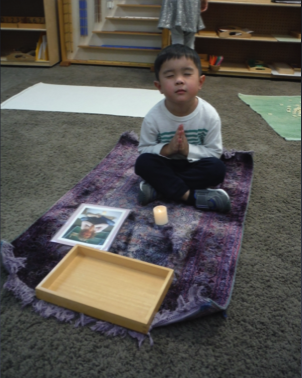
The four-year old girls were good friends, but now they’re angry. One said something to the other, tempers flared, and a friendship is in jeopardy. Fortunately, the children are in a Montessori classroom. Montessori schools use many techniques for harmony, but in this classroom they have a peace rose. One little girl retrieves the flower from its shelf, expresses her hurt, and passes the rose to her friend. Together they explore their feelings, and conflict is transmuted into understanding. The children have learned a process to maintain harmony.

In a time of resurging intolerance, we may turn to our classrooms for reassurance. They are gardens of peace, the fields where we sow the seeds of a better world. We may seek solace in the work we do, knowing that the beauty we nurture will in time blossom into magnificent flowers of justice, kindness and equality.

Recently I have found myself thinking again and again about victory. We know that peace is more than just an absence of war. But what is a Montessori victory? Do we conquer our enemies? No. We will not repair this world by subduing those who disagree with us.

Do we shout down the bigot? How much better for the world if the bigot abandons their bigotry? How much better if the criminal no longer commits crimes, if the sinner no longer sins? The second World War was conceived when the victors of the first war mistreated the vanquished; a third world war was averted when the conquered became allies. Force without justice is domination, not victory.

A Montessori call to arms is a call to the classroom. This is where we cultivate real victory.

True and lasting peace will arise from our schools, where we prepare the next generation of peaceful leaders. The work we do is ever more vital, and I urge you not to despair at the territory we still have to cover.

Let’s recall how far we have traveled from 1907, when Dr. Montessori opened the Casa dei Bambini in Rome. Nominated three times during her life for the Nobel Peace Prize, Dr. Montessori worked tirelessly to improve the rights and conditions of women and children. Justice informed her methodology, and peace infuses the very DNA of our classrooms. The strides made for liberty in the past century – the advances made for children, for women, for minorities, for gays and lesbians – do not doubt that even today we see the ripples of her work throughout all the social progress we’ve made.

That the task is not yet complete should not surprise us.

Wherever we look globally, we see the anger and the outrage of those who have felt excluded from the political process. Income inequality is at an all-time high. Far-right parties are rising across the world, fueled by bigotry, economic uncertainty and a populism born of the sense of neglect by elite powers. The political turmoil is only one of the symptoms of our broken world. We do not forget the millions of refugees fleeing war, and the victims of the terrible wars themselves.

Do not be disheartened, for as long as we teach peace there will be a light in this world.

Yes, our work begins in the classroom, but shall we stop there? What else can our school communities do?

It will not be enough for us just to stall some current agenda. When we work to defeat ISIS in the Middle East, Boko Haram in Africa, or unseat some political adversary at home, we earn but a moment’s respite. Unaddressed, hatred and violence will always return in a new form. A lasting peace requires us to heal the deeper wounds of this earth.

Dr. Montessori taught us that when children act out, it is because they have unmet needs. Is this not true of adults as well? Perhaps at no time since the second World War has the planet been so united in angst about the future. Montessori has a healing message for a broken world, and this is the time for us to recommit to telling the story, both inside and outside of our classrooms.

We can begin by speaking our healing message. Shout it from the mountaintop, whisper it in the halls of your school. Organize, promote justice, discuss difficult topics. Model peace in and out of your classrooms. Educate the children and adults in your community. Participate. Engage.

It begins and ends with our conviction that Montessori has a message of peace which will mend this world’s wounds.

Here is my attempt to formulate a Montessori statement on peace. We urge every school to create such a statement and share it. Feel free to use or modify mine as you see fit.

A Montessori Statement on Peace

  • We believe that we can change the world.
  • We believe that when you work with children, you touch the future.
  • We believe that peace is more than the absence of war. We will repair this planet by building a lasting peace.
  • We believe that anger comes from hurt and that hatred comes from fear.
  • We believe that a lasting peace comes from understanding, respect and love for all life.
  • We believe that Montessori is education for the 21st century, and the 22nd, and the 23rd – that this is the best and truest method for preparing children to become the next generation of leaders.
  • We will prepare the peace by addressing the causes of suffering, and prepare the children in our classrooms to look suffering in the eye and say “no more.”
  • We believe in the dignity of the child and of the adult. We believe that it is possible for mankind to live in peace and harmony. Moreover, we are going to make that happen.
  • We believe that all people have a place at our circles. We commit to bringing into our circles those who have been most excluded.
  • We believe that all voices should be heard. We know that when people shout, it is because they do not feel that we are listening.
  • We will always stand with the oppressed, but never fail to hold a hand out in peace to the oppressor – for we know that someday they will take it. On that day we will all be free.
  • We believe the world may be made forever safe from demagogues and dictators. As Montessorians, we know our students will laugh off the shackles of fear that tyrants use to bind the populace. Furthermore, what tyrant could ever arise from our beautiful, peaceful classrooms?
  • We believe that we may go forward so that we will never go back again.
  • We know that when we march forward from dark spaces, we will bring all of our sisters and brothers with us into the light – and leave none behind.May we all increase our efforts to make peace.  May we all have peaceful hearts.  May we all believe in the beauty of a future full of hope, love and peace.With love,

    Britney

Security Upgrade for MCS Campus

The Montessori Community School received a big security upgrade today. The CCTV cameras in the parking lots were upgraded as well as the security lights. While the lights are now 4 times brighter than the previous lights, they are LED lights so they are consuming around 1/4 of the power of the previous high pressure sodium lights. Lian and Jemmyn spent the better part of the day up in the sky on a 65ft. boom lift


Peer Conflict – What is a parent to do?

A note from our school psychologist, Dr. Melissa DeVries, Ph.D., on how parents can effectively support peer conflict with Early Childhood aged children…Enjoy!
Handling Peer Interaction Complaints From Your Early Childhood Student

It can be difficult to know what to do when your child voices complaints about negative experiences with classmates. Parents natural response is to be protective. Thus, many of us jump to the defense of our child, driven to find an expedient end to the problem such as asking classroom teachers to stop it from happening again. While well-meaning, this may not be the most feasible or beneficial way to handle peer problems.

In fact, situations like these represent a unique opportunity for parents to engage their child in problem solving and social skill-building. They learn these skills by (1) observing parent reaction and problem solving styles, and (2) practicing new skills on their own during future problematic encounters. The 3- to 6-year age group is a crucial time for learning social emotional skills that research shows contribute to success later on. Over and above acquisition of early academic skills, children who develop their functional communication, the ability to tolerate delayed gratification and the ability to comply with reasonable requests (i.e., follow directions) show better school performance (and overall life skills) down the road.

The next time your child comes home with a complaint about a negative peer interaction consider the following thoughtful response methods:

  • Offer Empathy and a chance to tell their story…“I am sorry that happened today, tell me more about ________________. How did you feel when _________________ happened?” If you feel inclined to react with your own emotions, do your best to take a breath and a break, followed by empathy. Remember that your reaction may encourage or discourage a variety of emotional responses from your child.


  • Consider whether you need more information from another perspective… all stories have more than one side. We can better process the event and plan our response when we have more information. After taking time to visit with your child about the event, author an inquiring email to their teachers if you still have questions. Remember to remain factual. Present what your child said (in their own words) and ask not for a solution (yet) but for more information. What have the teachers observed? What has been tried and worked or not worked for these situations? What can you (the parent) be doing to support your child?


  • Understand what your child would like to see happen instead… We may intuit that our child is bothered by the interaction because they felt the need to tell us about it. But, we should ask specifically what was it that bothered them and why? For example, what did they want or expect to happen that didn’t? How would they have preferred the interaction to go? What would like they you (the parent) to do to support them? If their response involves a reasonable goal, we can find a different way to help them achieve that goal.


  • Teach, model and offer opportunities to practice (through role play) a new way of responding… Help your child generate ideas about other ways to respond should the situation occur again. What can they do differently and what do they think the outcome might be of those new responses? Practice using role play skills. Don’t forget to anticipate both positive and negative outcomes (as these provide opportunities to practice handling disappointment and persistence, but also helps maintain hopefulness that things can get better.)


  • Email your child’s teachers again with a plan you and your child have worked out at home…make the classroom teachers aware of the plan so they can be supportive of the newly learned skills your child will be using and can continue to follow up if other skills are needed. AND, don’t forget to check back with your child about how the new plan is working!

Order Spirit Gear by Nov. 11

Montessori Community School presents MCS Hoodies and Neck Gaiters. Show your Montessori School pride and support by rocking one of these items this coming season. Order cut off date is November 11, 2016 so ORDER NOW!

Hoodies come in Adult, Youth, and Toddler sizes and neck gaiters come in Youth and Adult sizes.

Hoodies may be tried on during school hours. A clothes rack with the various sizes and colors may be found in the school lobby.To order, go to www.mcsslc.com/gear.