Author: Alejandro Malespin

Montessori Parents’ Guide to Snowbird Mountain School

Montessori Parents’ Guide to Snowbird Mountain School
February 3rd, 10th, 17th, 24th, & March 2nd, 2016

Print article or read on:

Is my child old enough to learn to ski? Or snowboard?

Snowbird Mountain School provides lesson experiences for children as young as 3. However, just because your child is 3 years old, doesn’t mean that he or she is ready to be in mountain school. Here are some things to consider:

  • Is your child comfortable being with adults other than family?
  • Does your child go to daycare or play groups?
  • Is your child “potty trained” and able to use the bathroom facilities independently?
  • Has your child been exposed to snow and winter conditions?

If you answered no to any of these questions, you may want to approach with caution. Your main focus should be on the overall experience your child will have. Let’s face it, if they have a bad experience, you are sure to feel the negative impact on your vacation!

We do not offer snowboarding with the Montessori School until the child is at least age eight. This is due to equipment needs, and developmental processes of MOST children.

Please direct any special needs concerns to Montessori School.

Accommodations can be made with prior notification.

What can I expect my child to learn during the program?

Kindergarten kids often take longer to “get their wings” and be able to ski on their own. Often the preparedness of the child, size, willingness, and ability to balance, and equipment fit are the keys to a quicker beginning. Each child is an individual, so success is about having fun and wanting to come back!

Older children will often learn to turn and stop on the beginner slope by the end of the first day. Snowboarding may take a bit longer. Be supportive at the end of the lesson, and encourage your child to be happy with small successes. Just balancing while gliding on skis or a board is quite an accomplishment! Once the basic sensations have been repeated enough times, there is often an “aha” moment when a child can glide and turn.

Our instructors use an activities based approach, in which children are often familiar with the games they play, and the variable is the skis or snowboard. This will often appear that they are “just playing games” but basic skills are being absorbed by the children as they play, making the next steps come much more quickly… not to mention that the process is indeed fun!

For children who already know the basics, the groups are split by age first and then ability. This is to provide common ground for the children (we don’t want a very young child to be riding with a group of teen-aged kids) so they will make friends and want to come back again and again. The groups often explore the mountain together, and find challenges through activities that will build skills and help them learn resort safety and etiquette.

What can I do to prepare my child for Mountain School?


  • Talk about winter activities and what your child can expect. View the web site together, and look at photos of the places they will be visiting. Experience other winter oriented activities together if possible with your child. The idea is to eliminate the unknown variables in the sport to make the transition from the unknown to the known easier.
  • For very small children, rent, borrow, or buy gear ahead of time and let your child walk around on carpets or on the lawn fully geared up. This will give some confidence and familiarity… be prepared to allow short exposures often!
  • Kids should know their full name, birth date, parent’s full names, phone number, and address at home. If staying at the resort, put your business card with the room number and/or cell phone number where they can access it.
  • Kids should know if they have allergies and what to do about them. Bring any medicines they will need, educate the staff, but remember that we are NOT licensed to administer medications, so either you will need to be there to do it, or arrange for medical personnel through our ski patrol to cover it.
  • Older children should be prepared to learn safety rules ( review safety etiquette called YOUR RESPONSIBILITY CODE that can be found at nsaa.org)
  • Be sure to have your child’s gear checked by a reputable shop. Be sure the bindings are set to the boots properly. Children grow very quickly, so double check… it can mean their safety.
  • Be sure your child has proper clothing, eye protection, and sun protection.
  • Water and wind resistant, breathable insulated pants and parka.
  • Water proof gloves or mittens (mittens preferred for younger children). Remember they will be in contact with lots of snow all day long!
  • Helmets are recommended,. For information on purchase and fit, visit lidsonkids.org .
  • Neck gaiters are a must; especially when it’s snowing (and it does that a lot at Snowbird!)
  • Eye wear is critical; if you can’t see, you can’t ski or ride! Please be sure your child has appropriately sized goggles or sunglasses (UV protective). Snow can burn developing eyes easily, so be sure your child can tolerate them.
  • Put sunscreen on your child before arrival. Staff will make the attempt to re-apply, but children are not always available and willing, so be sure the first coat gets applied by YOU!
  • SOCKS are critical. Be sure to provide one pair of socks that fit well, are NOT cotton (this will make for cold feet!). Imagine wrinkled socks and uncomfortable feet; and be sure your child doesn’t have them!
  • Mark all personal belongings!!!!
  • When you return to your room, be sure to get the clothing and gear dried out. This is often forgotten, and can make the next experience very soggy.
  • Try to plan for a good night’s rest, adequate time to eat well the day before and a nutritious breakfast. Load them up on water and/or juice or sports drinks. Altitude can be an issue for children, but if they are properly fed, rested, and hydrated, the day will be more enjoyable.


What are the goals for your child’s experience?


It is important to determine what your goals are for putting your child in mountain school. Are you hoping they will become the next Bode Miller? Do you want them to enjoy being on the mountain while you grab a bit of r&r? Are you mostly interested in providing them with a challenging and exciting experience that they will want to repeat? Be as honest in your assessment as you can be, and you will find that your expectations will be more likely to come true.

 What level should my child participate in?

  • If your child has skied or snowboarded before, try to be specific as to how much, and on what slopes, and where. It is important to know if he/she could turn and glide by themselves, or if they were held or used a device to hold the skis together.
  • It is also important to note what resort your child went to, and how long ago. Snowbird has challenging slopes to learn on, so be conservative. A blue square slope at a different resort might be a green circle slope here, especially during inclement weather.
  • Remember that it is always easier to graduate a child up a level than to demote them, so be conservative in your estimate, and rest assured we will move them to a more challenging group if need be.
  • All classes take warm up runs in the beginning, and appropriate adjustments will happen at that time.
  • Our goal for your child is first and foremost to have FUN and enjoy the company of the children they are with. If you feel your child is not challenged enough, be sure to speak with his or her instructor so you can find out what actually happened in the class.
  • Check out the web site for the skill level descriptions.


Security

  • Children must be signed in and out of the program by staff members. Please be sure to follow this procedure for your child’s protection.

What kinds of questions should I ask the instructor after the lesson?

  • Ask about the best part of the day, or the favorite activity
  • Ask what slopes and trails they experienced together
  • Ask where you might be able to ski or ride together safely
  • Ask if they made new friends, and what they are looking forward to next time

Please let us know how we did, and if there is anything we can do to make you and your child’s visit more enjoyable!


Helpful Websites


www.snowbird.com for additional program information


www.aasi.org for the American Association of Snowboard Instructors


www.lidsonkids.org for more information on helmets


www.nsp.org for the National Ski Patrol. Listed under safety/dressing properly


www.nsaa.org for the Responsibility Code


www.psia.org for the Professional Ski Instructors of America

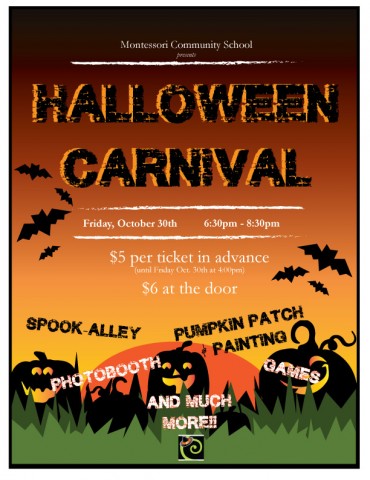
Halloween Carnival

This year’s Halloween Carnival is sure to be the best yet. There will be games, activities and a lot of fun and laughter! Tickets can be purchased from the MCS office.

Ticket Price: $5 in advanced / $6 at the door

Some of the activities are:

Trunk or Treat
Spook Alley
Kim’s Cold Blooded Creatures
Pumpkin Pick & Paint
Dancing

Costumes are most welcomed and encouraged!

There will be a volunteer sign-up form in the MCS lobby. This is great way to get some parent volunteer hours and have a safe, fun, and exciting night with your school community. This event is open to other family members and friends.

Please email: PSA@mcsslc.com for more information and and questions.


Halloween Carnival Flyer  to print for your fridge at home!

MCS & The Adopt-A-Native-Elder Program

On Thursday, November 5th our Lower Elementary, 3rd Year students will have the opportunity to learn about the Navajo way of life at the Deer Valley Navajo Rug Show. For more than fifteen years, the Montessori Community School has sponsored our Navajo grandmothers through the Adopt-a-Native-Elder Program.


Grandmother Elvira Horseherder speaks to our students and tells them the meaning of the rug pattern she wove for them and our school.

The Program supports traditional Elders who live in the cultural and spiritual traditions of The Dine’ People. Most live in remote portions of the Dine’s (Navajo) reservation. As they have become elderly, it is difficult for them to support themselves on the Land in their traditional ways. The program provides food, simple medicines, clothing, firewood, fabric, and yarns to help these Elders live on the Land in their traditional lifestyle.

Our MCS community adopted Navajo grandmothers, Grandmother Emma Bahe, and Grandmother Elvira Horseherder. Each fall, Grandmother Elvira attends the rug show and spends some time with the children. She is a wonderful woman with a generous spirit and the children love the interaction with her. Though Grandmother Emma’s health keeps her from making the long journey to the annual Rug Show, she sends her love through the rugs she weaves, which we are able to see on our trip.

Grandmother Elvira Horseherder


Grandmother Emma Bahe

Our students, along with students from several other schools, are given the opportunity to watch a presentation given by Elvira and other elders on various aspects of the Navajo culture (i.e. hogans, weaving, corn grinding, etc.). In recent years, a few of our students have had the opportunity to try out the looms or have their hair tied up Navajo style (for those with long hair).   The elders travel hundreds of miles to the Rug Show and we are very grateful to have the rare opportunity to experience a first-hand glimpse of the Navajo way of life.

MCS students getting their hair tied in the traditional Navajo way.

We will be collecting dried and canned food, VISA gift cards, tools, toiletries, clothing, lightly used children’s coats, gloves, hats, backpacks, and school supplies (a more detailed list of items can be found clipped to the sign in the MCS lobby) to give to the Navajo elders. Watch for collection bins outside your student’s classroom.


Our students will deliver the donations to the Navajo elders on the day of the Rug Show. We really look forward to this wonderful tradition and love to learn more about and be immersed in the Dine’s rich culture.

MCS Scholastic Book Fair

Give the gift of reading this Holiday season. From November 2nd – 6th a beautiful book fair display will fill MCS’ lobby. This is the perfect time to order and stock up on fabulous gifts for your own student(s), family members, friends, and even grandparents. After all, the holidays are right around the corner!

If you are unable to attend the book fair here at the school, you may purchase books through our online fair. Please share this with family and friends as well.

By purchasing books through our book fair you will not only get, or give, the gift of reading; you will also be benefitting the school. 50% of all the proceeds will be donated back to MCS to purchase library bound books, furniture, classroom materials, etc.

If you are interested in signing up to volunteer during the book fair hours, please see the sign-up sheet in the lobby.

If you have further questions about the fair, please direct them to Kim Brown, kimbrown@mcsslc.com.

Fire Safety and Fire Drills


This last month our Toddler and Early Childhood students participated in an in-house field trip where a local Fire Department spoke to the children about fire safety.

“Mom, if you are on fire you have to stop, (long pause) get down, and….um….roll around.”
– 2nd Year Early Childhood Student

We encourage families to further speak with their children about general fire safety and put an action plan in place in your own homes on how to get out safely if there ever was a fire.


Today, we practiced an all-school fire drill. We were so impressed by our teachers and student body in being able to evacuate and clear the building calmly and safely in record time.


Please keep the fire safety conversation going with your student(s).

A Closer Look at Montessori Math

The Montessori math curriculum is quite unlike the traditional approach that each of us experienced.  It is based on developing a strong foundation through concrete experience and manipulation until the time a child reaches the age of abstraction, typically around nine years old. As they engage in the Cosmic Curriculum, children are given a basis for the interconnectedness of all things and encouraged to engage in the wonder and magic of mathematical concepts.  Various activities and materials develop the mathematical mind, preparing the child for their inevitable explosion in to abstraction and connection to the power of relationships.


The following was written by Lower Elementary Spanish teacher, Diana Haro Reynolds.

Mathematics is the study of quantity, form, and magnitude. We live among it. It is in the position of the sun and in the shell of a snail. We carry math in our pockets, in our devices. It is what makes our communication possible. We touch and live math, whether we know it or not. It is our responsibility as Montessori guides to help the child discover this framework of mathematical order that makes up our world. This rationale proposes several reasons for teaching math in the Montessori classroom. It will explain the journey the child will take from concrete concepts through to abstraction.

Human beings have a tendency for order. Since the beginning of human origin, math has been used to unlock the mysteries of the world. It began with a man’s need to
keep track of his belongings. Then came early techniques that created the experience
with numbers of counting. After a long time, came comprehension, which led to
improvements and shortcuts. Finally, humankind reached abstraction. This same
process is seen in a child. (Doer, 2012)

Mathematical order leads to a mathematical mind. As the mathematical mind unfolds, it develops capacities such as sensorial interaction among objects, observation
of patterns, and awareness of the physical world, mental classification, abstract thinking, and knowledge of the power of relationships. Math supports understanding by encouraging order, concentration, independence, special relations, patterning, one to one correspondence, combination, difference, and similarity. Additional goals supported by math are predictability, exactness or sense of accurateness, concreteness, logic and reasoning, problem solving, and decision making skills, as well as refinement of the mind and thinking. (Stockton-Moreno, 2015)

Why the need to teach math in a specific Montessori way? There are a lot of aspects that prepare the child for math. These include the prepared environment, giving the child the power of choice. Practical life works build concentration and confidence. The child enjoys practicing a task over and over for the pure pleasure of it. The joy is in the process. This mentality is preparing him for the academic areas. Sensitive periods serve as the specific times in a child’s development where part of their needs include an insatiable thirst for specific tasks. There is a sensitive period for concrete tools of precision. We must capitalize on these sensitive periods. (Stockton-Moreno, 2015)

The aims of Montessori math are to make the child aware that math is a part of her life; to build confidence and prepare the child for life. Confidence comes from the sequential growth in which the materials are presented. It starts with the importance of the Three Period Lesson. The first period being the presentation of the concept. The
second period is where the child practices and shows that which has been presented. In math, this second period is much longer than in other areas of study. This is the time in which the child is practicing, exploring and making discoveries, day in and day out, about the concept presented. The third period is that in which the child shows understanding of the concept through teacher observation or helping someone else.

The main goal of Montessori math is to move the child from concrete to abstraction and helping him form a mathematical mind. In the book, A Way of Learning, Ann Burke Nerbert explains that “the mathematical mind derives from experience” (Stockton-Moreno, 2015). We must not rob the child from forming her mathematical mind. She must have ample time to experience the joy of working with the materials and for understanding and internalizing the processes and concepts. The materials are
multimodal in that they appeal to multiple senses. This aids in the “permanent wiring of the brain that will be available as your child gets older and uses her brain for analytical thinking and problem-solving” (Duffy, 2008). Knowing is not understanding. Montessori math provides the path toward understanding.

According to Michael Doer, the passage towards abstraction is done in four stages. The first is the Concrete stage. This is where the child works purely with the material. No works is shown on paper until the child is nearing the end of this stage. The second stage is Concrete Materials lead to Symbols. This is when the child works with
the materials and records the process in writing. This is the longest stage and requires
that the focus be on the process, not the end result. This is the time in which the child is “internalizing the algorithm” (Doer, 2012). Towards the end of this stage the child may begin to work with charts rather than manipulatives. The third stage is often overlooked perhaps because it is the shortest. This is the stage when Symbols connect to Concrete Material. Essentially it is the reversal of stage two. The child does the work on paper then uses the materials to check their answer. The Symbolic stage is the fourth and final stage. This is where the emphasis is on showing the written work. (Doer, 2012)

Doer also emphasizes mental calculations and mental carrying as the two key elements in reaching abstraction. Mental calculation or memorization requires that the
child know math facts with accuracy and speed. The child should take no longer than
three second to recall a fact, otherwise, memorization has not been reached and the
child is calculating. Accuracy should be no less than 98%. It should be recall only. The
second key, mental carrying, requires that the child be able to keep track of the carrying without making a mark on paper. Having the child work on other forms of memorization, such as poems or definitions, will greatly help achieve this goal.

Math is part of our society. We need it in order to function. But there is also a math phobia. Math in Montessori makes it more than accessible, it makes it real. Whenever possible, real life problems should be presented to the child so as to give her
the context for these new skills. Among with word problems, research in the area of
math is a great way to expose the child to the practicality of math. We must cultivate a love and understanding of mathematics in our children by proving the keys and allowing them to make their own discoveries.

Diana Haro Reynolds – Lower Elementary Teacher/Intern

References

Doer, M. (2012). Numbers: Montessori arithmetic for lower elementary.

Duffy, M. (2008). Math works: Montessori math and the developing brain. Hollidaysburg,

PA: Parent Child Press.

Stockton-Moreno, L. (2015). MONT. 633*01, week 1 notes [PowerPoint slides].

MCS’ 2015 – 2016 PSA Team

Left to right: Jeannette Shaffer: Lower Elementary, Gretchen Strear: Early Childhood, Greg Feucht: Toddlers, Annie Guerrero: Upper Elementary, Soo Schmidt: Early Childhood

This year, the Parent School Alliance (PSA) has been restructured to include one (1) representative for the Toddler, Lower Elementary & Upper Elementary age groups, and two (2) representatives for the Early Childhood age group. We hope that the presence of a PSA Team will continue to help facilitate conversations between parents and the school, and to create events throughout the year that give us an opportunity to get to know each other, and have some FUN!

The PSA includes parents, faculty, and administrative staff of MCS and allows us to work together with a mission to offer support to our school, which allows our children to get the most out of their education.

There are a number of ways for you to get involved such as various Social Events, Fundraisers and MCS Community Committees. We would love your enthusiasm and assistance in getting involved with Community Building for your child’s class, the Halloween Carnival, the Spring Music & Dance Performances, the Art Showcase and the End of Year Carnival. By participating you will work toward completing your parent participation hours, have some fun and it will also give you a chance to help improve our school.

Parents are always encouraged to participate as volunteers in the classroom, help with events, and attend our PSA activities throughout the year. Volunteer opportunities are fun, diverse, and vary in time commitment. We encourage you to be as involved as your schedule will permit.

We look forward to working with you over the next year. Please feel free to contact us at any time. Also, we will have a PSA Suggestion Box in the office at all times, and we will be available to answer any of your questions via this box or you can email us direct psa@mcsslc.com.

Thank you again for your support.

Montessori, Why Not?

I choose a Montessori school for my son almost as an act of faith. At that time my knowledge of the method was null, besides having heard of small chairs and colored beads. But seeing my son happy day after day encouraged me to study and deepen the Montessori’s ideas. What I had discovered astonished me as a father and as a scientist. As a father, I found how children are really respected and prepared for the future. As a scientist, I found solid scientific foundations for everything Maria Montessori proposed.

And now, that my son completed his Montessori experience, I have many examples from these years to show that, I hope, could convince other parents that their fears and concerns have no reason to exist and that sending their children to a Montessori school is the best gift they can make to them.

Good morning and thanks for the invitation!

I’m a Montessori father and I’m here today to share with you the reasons why I sent my son to a Montessori school and why I’m convinced this had been the best gift I ever had done to him.

Read More…