Author: Alejandro Malespin

Technology in the Home

We recently had the privilege of hosting a Parent Education Event where a panel of experts prepared and presented information related to the use of screens in the home.  Below you can find some important take aways from that event.  Should you want further information from the event, you can find copies of the handouts on the Scholastic News table in the school lobby.

Current research indicates the use of screens and an investment in social media my be impacting children’s ability to regulate emotion and the things kids are missing out on are worth taking a second look at as we establish the patterns around media in the home.  Dopamine, oxytocin and seratonin levels are impacted by screen use and in turn, other areas of the child and family are being impacted.  The argument that we live in a time that its impossible (or even difficult) to escape the use of technology is worth considering. But does it have to be all or nothing? Like all parenting decisions, we recommend mindfulness in creating structure around your family’s approach to technology in the home.

Bottom line, we all have a lot to learn about the advantages versus the disadvantages of screen time and we are a new generation of parents, paving the way.  The best way to navigate such circumstances is to stick together, share our successes, and keep trying.  Inevitably, we will make mistakes but here’s to creating balance and growing healthy, happy and creative kids!

Below is a quick guide for your reference:


Risks of overuse or early use of screens:

Infant, Toddler and Early Childhood aged children:

  • Language delay (acquisition and use)
  • Behavior concerns
  • Low threshold for frustration
  • Short attention span
  • Lack of interest
  • Aggression
  • Sleep and self-soothing issues
  • Sedentary lifestyle
  • Cognitive delay
  • Memory issues
  • Delayed social development.

Elementary and Adolescent aged children:

  • Increased attentional difficulties
  • Reduced engagement between parent and child
  • Reduced face-to-face interactions, outdoor play (with benefits of problem solving, creativity and exercise), reading, homework completion, participation in chores, and sleep
  • Earlier sexual debut and sexual risk taking behavior (by those who view sexualized media content) due to accelerating the normal rise in sensation seeking seen in adolescence
  • Sleep disturbance (most significantly those with increased daytime and nighttime screen use, especially for those with a television/electronic devices in their bedroom)
  • Sleep deprivation is in turn linked with higher rates of obesity, diabetes, academic underachievement and behavior problems including hyperactivity
  • Increased verbal and physical aggression and propensity for later violence (for those viewing violent content), misinterpretation of others’ behavior as negative or hostile, decreased empathy, less pro-social behavior, increase in violent reactions to confrontation
  • Increased exposure to foodstuff based advertisements (average is 1 public service announcement on health/nutrition for every 26 food commercials; young children have been shown to select items they have seen advertised over those not)
  • Increased rigidity of gender roles and stereotypes (depending on content viewed)
  • Decreased satisfaction with appearance/body image, unrealistic/stereotyped/unhealthy views of beauty and health, focus on thinness and sexualized appearances as being preferred
  • Increased fear, sadness, anger and/or depression in response to viewing news media
  • Difficulty telling real from fake news viewed through media; ⅓ of children admit not questioning the source of their news and ⅓ take no action to verify the truth of news they suspect may be inaccurate
  • Activation of sexist beliefs about sexual harassment, dating violence and sexual assault myths

Positive uses/benefits of the use of screens:

  • Using technology as a way to review and master information taught FIRST by a teacher or parent (i.e. teaching a math concept first, explaining the steps, allowing the child to practice using pen and paper, manipulatives etc. THEN practicing said math concept using a quality math program or application that is designed to aid in the retention of this concept).
  • Television, games, etc. can be a great way to reinforce themes of relationships, managing emotions, problem solving and resolving conflict if they are offered age-appropriately.

Structuring screen time in the home:

  • Co-watch/co-play with your child whenever possible
  • Choose media that supports your family’s values
  • Ask questions about your child’s understanding of what they are seeing. Assess their understanding of reality vs fantasy. Explain advertising and other concepts that may influence your child’s belief systems
  • Set limits on all media access (tv, video games, cell phones, social media, apps, etc)
  • Understand the rating system of video games (and tv/movies). IMDB Parent Guide is great for movies/tv explaining every instance of violence/gore, profanity, substance use, suspense, and sexual content. Appreciate that sexualized content/pornography is embedded into higher rated video games
  • Do not allow children to play video games with unknown users on the internet
  • Create screen free times and screen free zones within your home (bedroom and dinner table are 2 spaces highly recommended to be screen free for ALL family members)
  • Activate a network of trusted adults (extended family, family friends, coaches etc) who can engage your children through social media and support them when they need help
  • Have ongoing communication about digital citizenship and online safety
  • Create a family media plan based on…
      • open communication
      • clearly defined rules and consequences
      • parental modeling of good digital behavior and media access
      • clear expectations, with consideration of exceptions (e.g. do the rules change when family is visiting, when on vacation, when sick, when behind in schoolwork, when friends are over or when at a friend’s house, summer break/holidays, when there is a babysitter). Ensure that all adults responsible for caring for your children are up to speed on the media plan
      • Time limits
      • Age-appropriate application of parental controls/content filters and monitoring of digital access
      • Understanding that supervision and honesty is a component of the plan


Signs that indicate you may need to change your child’s screen use:

  • Social and relational skills seem off to you.
  • Your child exhibits some these symptoms:
    • Irritable
    • Depressed
    • Excessive tantrums, mood swings
    • Low frustration tolerance
    • Defiant
    • Trouble sleeping
    • Disorganized behavior
    • Learning difficulties
    • Poor short-term memory
  • Your child’s symptoms are causing major problems in school, at home or with peers.
  • Your child’s symptoms improve after 3-4 weeks of strict removal of electronics.
  • Symptoms return with the re-introduction of the electronics.
  • Less Reading
  • Less Brain Downtime=fatigue
  • Less Sleep

Book Recommendations:

Jean M. Twenge- IGen- Why Today’s Super Connected Kids Are Growing Up Less Rebellious, More Tolerant, Less Happy and Completely Unprepared for Adulthood
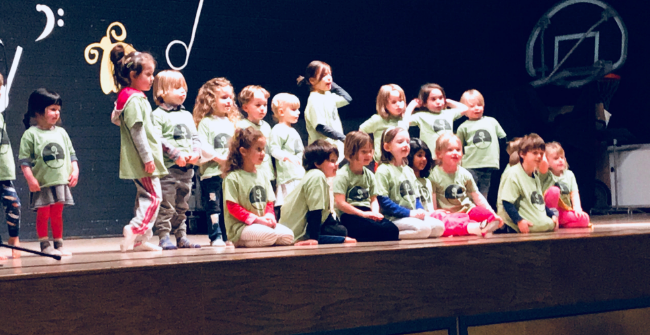
2018 Early Childhood Performing Arts Showcases

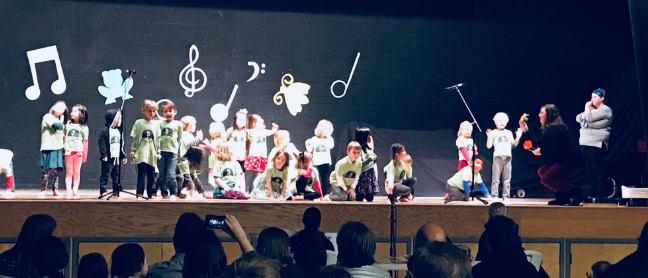
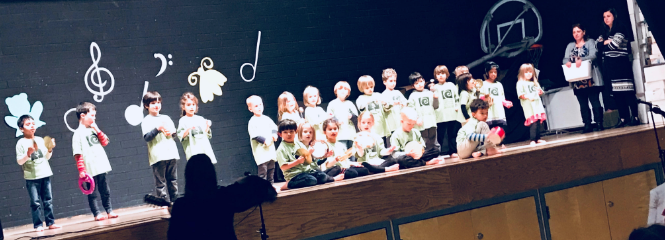
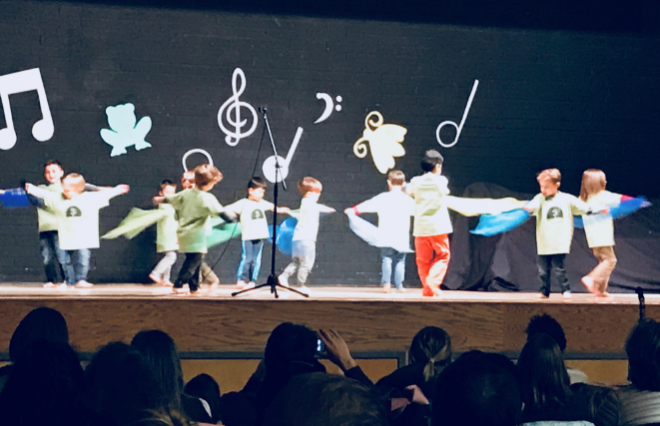
In the month of February our Early Childhood students had the opportunity to perform on stage for their parents and teachers! It was a lovely experience for all.  The purpose of the showcases is to give parents a glimpse of what their students are working on in class.  Showcases also allow children the chance to learn what it is like to be on stage. Although this is the first time many of our students have been on stage, their enthusiasm for performing for loved ones was contagious! During each showcase the students smiled & waved at the sight of family and friends.

As a Montessori program, we take pride in our Specialty classes as an opportunity to offer students experience in a variety of classes and skills.  Their experience in each of these classes is somewhat limited but the opportunity to learn more about their interests, along with skills taught about how to find more information about something of interest, is an important element in children seeking further experience in areas of interest!

We thank Haley Dame, our Movement teacher for students aged 3 to 12, and Ana Bunce, the Music Specialist for students aged infant to 6 and 9 to 12 for their time and energy preparing the students for this evening event.  Also, our gratitude to the parents, grandparents, cousins, aunts, uncles and friends who came out to support our Early Childhood students.

The Willows class shows a portion of their movement work using props.


The Magnolias class show their parents & family the skills they are developing in reading music.

The Sequoias Class play a game with a parent on stage, singing forte when he walks closer to a hidden object.

Big smiles from the Aspens class as they show their newly developing instrument skills.

2018 – 2019 Continuing Enrollment Letter from Administration

Dear MCS Families,

This email contains the link to MCS Continuing Enrollment forms for the 2018 – 2019 Academic Year. Included with these forms, you will find the new tuition schedules.  The overall tuition increase this year is approximately 3.4%. The additional funds garnered by this increase will be earmarked in three different ways: paying the rising costs of ensuring health care coverage for our staff, providing modest raises for our teachers and staff, and covering general ongoing inflationary costs.

We will be offering our Tuition Assurance Policy again this year. This optional program is designed to provide a measure of protection for both our families and the school in the case of student withdrawals during the school year. You will find more information enclosed within your packet.

If you are considering the Extended Day option, we would encourage you to sign up sooner rather than later. We base our Extended Day staffing on those who have signed up from the beginning of the year and we cannot always guarantee space for later schedule changes. Due to the challenge of meeting our ratios with appropriate staffing when changes are requested after the school year has begun, the deadline for making schedule changes is July 20, 2018. After that date, schedule changes will require a fee of $75.00.

If your child is moving into a new program at MCS (Toddler to Early Childhood or Early Childhood to Lower Elementary, for example), and you have a request for a certain classroom, please let the MCS Office know. Classroom requests will be considered, along with a number of other factors affecting classroom placement. As much as we feel fortunate that so many of our teachers stay year after year, we cannot guarantee that a particular teaching team will remain the same from year to year and hope that families will recognize that each of our classrooms offers a rich and effective Montessori environment for its students.

We understand that educational choices are a very thoughtful process and if your child will not be returning for the 2018 – 2019 year, we would appreciate you noting that information on the continuing enrollment form where indicated so we may plan accordingly. Additionally, if your family has elected not to return to MCS next year, we would recommend that you not relay that information to your child until close to the end of the academic year. It has been our experience that children who are told in advance of such a change often lose their focus for the balance of the year, and begin the process of separation long before the change is imminent. For that reason, we advise parents to wait until much closer to the end of school to tell their child that such a change is forthcoming. It will help your child stay on task, and will allow him/her to get the most out of the remaining months at our school.

Please complete the Continuing Enrollment form and submit your form, along with the $600.00 commitment fee (if applicable) no later than February 15, 2018. MCS will begin admitting new students for the upcoming year after February 15, 2018 and we recommend securing your child’s spot prior to that time.

If you have any questions or concerns, please do not hesitate to contact our administrative team. We are happy and honored that you have entrusted us with your child’s education.

Warm regards,

Robyn, Ramira, and Britney

2018 All School Assembly

Each year we attempt to come together as an entire school at least twice per year.  We begin each year with a gathering for International Day of Peace, where we meet on the green space to sing together before walking the campus to see the prayer flags made by each student at MCS.  Typically, our second gathering is in the gym and consists of some kind of science or cultural presentation. This year was especially enjoyable! This morning we had the pleasure of hosting Ballet Folklorico Quetzalcoatl, a local Mexican Folk Dance group, for our 2018 All School Assembly.  The group presented a variety of dances, music and costumes, all of which were delightful!

The first number was called Son Jarocho, is from Veracruz and is the main manifestation of the veracruzana party, whose origin is a mixture of Spanish airs influenced by African rhythms, executed with jarana, requinto and harp among others.  The typical attire, which we were able to see today, consists of wide and white skirt with lace, blouse with white tulle blanket, black apron decorated with flowers, necklaces, a laced fan, rebozo, white shoes and a red ribbon headdress with red and white flowers for women. The men wear trousers, guayabera, white hat and shoes, with a red scarf on the collar adjusted with a ring.


Among today’s numbers, several were from Nayarit, located on the coast line of the Pacific Ocean.  There are several types of Nayarit songs, all representing ancient native music, filled with theatrics in costumes and dance.  Impressively, the women danced with bottles atop their heads and the men with machetes!  The machetes were a crowd pleaser, to say the least.

Today’s dancers represented Jalisco, located in the western part of Mexico.  These songs are popular melodies that people can sing and dance to. Originating from the mix of Spaniard and Native music, the harmony is rhythmic, loud, and at contreremps, expressing the vitality that caracterizes the people from it’s region.

All in all, this cultural presentation was extremely satisfying, so much so that many of our toddlers found themselves off their seats and dancing to the beat.  While it can be a feat to gather our entire school in one place all at the same time (and even more of a challenge to find a presentation that satisfies children ages 1 to 12) we were overly pleased with today’s performance and the opportunity we had to gather together as a school.

A Sustainable Living Tip – Celebrating Trees

Last Wednesday, January 31 marked the ending of the Jewish holiday of Tu B’Shevat—the Jewish New Year for trees. Tu B’Shevat is a celebration of trees and all the resources trees provide. The celebration of this holiday serves as reinvigoration of appreciation for these amazing lifeforms. 

Trees provide a wonderful way to connect kids to their natural world. There are many ways to promote mindfulness about our environment by helping kids consider all the ways trees enrich our lives. Trees are important symbols of life and systems. 

One fun idea for appreciating and understanding the changes and lifecycles of trees is to “adopt a tree”. To do this, locate a beloved tree in area that is visited often. Draw the tree, measure the tree, name the tree, recognize all the wonderful things about that tree. Keep a tree journal where reflections, drawings and data about that tree are collected in different seasons throughout the year. Consider: How does the tree change? What habitats does the tree create for other living creatures? How is the tree unique? 

Trees are amazing.

When I Am Among the Trees
By Mary Oliver
When I am among the trees,
especially the willows and the honey locust,
equally the beech, the oaks and the pines,
they give off such hints of gladness.
I would almost say that they save me, and daily.
I am so distant from the hope of myself,
in which I have goodness, and discernment,
and never hurry through the world
but walk slowly, and bow often.
Around me the trees stir in their leaves
and call out, “Stay awhile.”
The light flows from their branches.
And they call again, “It’s simple,” they say,
“and you too have come
into the world to do this, to go easy, to be filled
with light, and to shine.

Keeping Up to Date With Environmental Legislation – A Sustainable Living Tip

The 2018 Utah Legislative Session is underway! Need help following and better understanding some of the proposed legislation regarding environmental stewardship in Utah? Below are some links to helpful online bill trackers.

Sierra Club Priority Bills

*Provides an option to sign up for weekly 2018 Utah Legislative Updates


HEAL Utah Bill Tracker

*Provides an option to sign up for weekly 2018 Utah Legislative Updates


Action Utah Bill Tracker

*See the section on Environmental Stewardship


Sustainable Living Tip: Buying In Bulk

Dear MCS Families and Friends,

Happy New Year! The Sustainability Committee is excited to announce that each week we will be writing about a tip for sustainable living. This week’s tip will focus on buying foods from the bulk bin section at the grocery store. While shopping from the bulk bin section can take a bit more time, it does reduce packaging waste, save money, and provide many non-processed/minimally processed food options. Most major grocery stores have a bulk bin section. One way to make buying from the bulk bin section nearly waste free is to bring reusable sacks. Below is a list of links for retailers that sell bags especially made for bulk food shopping. These bags are virtually weightless, so won’t they won’t add to the cost of your purchase. I personally recommend the Kootsac bags sold on Etsy. The Kootsac bags are durable for heaving items like beans and grains and easy to wash.

ChicoBag Hemp-Cotton Bag

Kootsac

Earth Junky Eco Reusable Bag

Hands on Hemp Produce/Bulk Bags

Simple Ecology Organic Produce/Bulk Bags

At home, you can store your bulk food items in jars or other airtight containers.

We look forward to sharing more tips with you. Please let us know if you have any great ideas!