Author: Alejandro Malespin

A Letter from Executive Director, Robyn Eriwata-Buchanan

At this time we would like to update you as to what  loan our school is in the process of applying for to assist us financially during this challenging financial crisis.

Below you will find the details of the loan. We are working with our banker at Chase bank to file the appropriate application. On the first day it was possible to apply for the PPP loan under the CARES ACT our book-keeper attempted to make our application. Unfortunately the Chase site was overloaded and crashed. Later we were advised to submit contact information and based on the time and date  we made our attempt to apply a Chase representative would be in touch to help us walk through the process. Our banker had kept us in the loop and advised that we were in the top third of the Chase customers (with a position of around 130,000 out of a total number of over 660,000 on the first day who attempted to apply for the loan. He believes that we should be hearing from a Chase representative soon.

When this situation first began evolving we quickly applied for a disaster loan but  once the CARES ACT was passed we were advised that if we chose to apply for the PPP loan that we could not also apply for the disaster funding. Consequently we sent a message asking to cancel that application and later still were advised by our Chase banker that we could possibly have applied for both. The information being sent  to the banks seems to be changing by the day and it is difficult for them to keep current too.

I am deeply grateful for your commitment to our school community. In our 35 years of operation we have never experienced any situation that would ask so much from our families. We love your children dearly and miss them so much. It is wonderful to be able to see photos and videos of our children’s experiences at home. Thank you so much for supporting your children, their teachers, Admin and the rest of our staff as we work together to navigate this very challenging situation. Please take care and be safe. We can’t wait for the day that we can  all return to school onsite.

PAYCHECK PROTECTION PROGRAM (PPP) LOANS – CARES ACT

The program would provide cash-flow assistance through 100 percent federally guaranteed loans to employers who maintain their payroll during this emergency. If employers maintain their payroll, the loans would be forgiven, which would help workers remain employed, as well as help affected small businesses and our economy to snap-back quicker after the crisis. PPP has a host of attractive features, such as forgiveness of up to 8 weeks of payroll based on employee retention and salary levels, no SBA fees and at least six months of deferral with maximum deferrals of up to a year. Small businesses and other eligible entities will be able to apply if they were harmed by COVID-19 between February 15, 2020 and June 30, 2020. This program is retroactive to February 15, 2020, in order to help bring workers who may have already been laid off back onto payrolls. Loans are available through June 30, 2020.


Extended Day Refunds

Please note that our Billing Department will be issuing full refunds for Early Care and Extended Day services for the time FMSL has been closed.  The first refund will span March 16th – May 1. If our closure extends, a second refund will be issued for additional closure time. FACTS does not have the option of issuing refunds through their system. Checks will be mailed directly.

Some families have emailed directly stating that they do not expect a refund of any kind for the duration of the closure. If you do not want a refund for Early Care and Extended Day services, please email billing@mcsslc.com.

If you are interested in exploring additional tuition refund or assistance and have not completed our COVID-19 Tuition Assistance Questionnaire, please contact britneypeterson@mcsslc.com with your request.

Emotional Vocabulary and Coronavirus – Parenting Connection

Talking about feelings can be a challenge for a wide range of reasons. Sometimes we don’t like the discomfort of vulnerability, sometimes we  haven’t quite acquired a complete vocabulary for emotional language and sometimes we simply can not quite identify what we are feeling.

This is a scary time to be human and there are a lot of feelings, some of which might be new for us all.  When the adults are scared, the kids know it.  This is a great time to model appropriate ways to manage these big feelings by showing ourselves love and compassion and practicing self care.

There are a lot of new and unfamiliar expectations on us and our children right now. Our routines are different, our jobs and school work are more complex, and fear of the unknown surrounds us.  While your child’s education is important and their school work should continue, the most important thing we can do is give them the love, attention and support they need to wade through this confusing scenario.  Some ideas for managing feelings and supporting your children are listed below.


  • A smile goes a long way. Children read our body language and energy quickly (and efficiently)! A sincere smile can ease a lot of feelings of discomfort.


  • Accept, acknowledge and give space for the discomfort. Your own and your child’s.  We can’t fix the confusion of what is happening in the world and that is okay.  Acknowledging it gives us power to find ways to cope. Everyone should have permission to experience their feelings!


  • Maria Montessori stressed the importance of the preparation of the adult. She called it the “spiritual preparation of the teacher.” Be sure to take time every day to prepare yourself in whatever way brings you comfort and strength. Then, allow yourself to be present for your child when the time comes.


  • Practice physical grounding, alone and with your child. Meditation through breathing, visualization, sound (chanting, mantra or song) and body movement (asana) all send messages to the brain and body to regulate your nervous system. Not only will this do wonders for your mental health, but is proven to improve the immune system.


  • Do you notice your child acting clingy? Moody? Quiet? Keep in mind, behavior is communication. Read their signs and try to respond accordingly.


  • Talking about feelings and giving your child your attention is important. But, so is their work cycle.  Be sure to observe your child and choose the right time to talk or interact. Avoid interrupting your child’s work/play as this is a form of self-care and self-soothing.  Plus, interrupting their work and play impacts concentration levels.  Allow your child to complete their cycle of activity to support their overall development and concentration.


  • Introduce emotional language at an age appropriate level. For toddlers and some early childhood aged children, visuals are helpful.  I suggest pictures of faces showing various expressions that can be matched with the corresponding vocabulary to help children develop  the language needed to express oneself.  Comparing feelings to the weather (cloudy with a chance of sunshine, for example) can help older children express vulnerable feelings while also making the connection that our feelings change.


  • The side by side chat: Many people respond to vulnerable discussion more easily when eye contact is not involved. Standing next to one another while working in the kitchen, sitting on the couch and knitting or putting puzzles together, or laying in bed after story time are all really great times to have conversations about feelings.


  • Use code words. Help your child come up with a code word they can use when they are in distress or when they feel they need your undivided attention. Maybe you can stop what you are doing immediately to connect and maybe you can make a plan then and there for a time to connect.  Ie; “Thank you for letting me know you would like to talk.  I am going to finish this work call and then I can give you my undivided attention.”


  • Use the right questions. Starting a discussion with “how are you feeling?” can be a turn off for people who are feeling uncomfortable, scared or otherwise vulnerable.  Try questions like:


  • What have you heard about the coronavirus?
  • What do you think about it/that/this?
  • What do you miss about going to school?
  • What do you like about being home with mom/dad/siblings/grandparents?


  • Create reliable and consistent routines for your “new normal.”


  • Create happy memories. When this is in the past, we are all going to be looking back on the lessons we learned.  Make an effort to ensure your child has happy memories of this experience. *Adapted from Webinar “How To Talk With Children When The Grownups Are Scared” Kathy Leitch, Montessori Foundations


Navigating the Financial Implications of COVID-19

Dear FMSL community,

As we navigate this new territory of distance learning, we are very grateful for the words of gratitude that have been sent our way. We have been especially touched by the members of our community who have offered to help support our talented and passionate teaching staff in this extraordinary time. This kind of support is wonderful to see and provides us with some much needed encouragement as we work through all the financial solutions available to us to keep FMSL alive and well for many years to come.

We are exploring various means of supplemental income to welcome our students back with as much normalcy as possible. I am overseeing researching state and federal funding options that are available to us. I am working with our bank and our HR firm to determine which is the best avenue for FMSL to use. I want to ensure that we are making decisions that can offer maximum support for our staff and in turn be of benefit to our families too.

We know that our community is also willing to do their best to support the school and each other through this unprecedented time. We are a tuition based school and that continued income allows us to provide our current services and ensure our staff is on hand for when we reopen our doors. We trust that you will help us by making the remaining payments on your contract for the current 2019-2020 school year. We are grateful beyond words for those of you who have continued to pay in full, or have pre-paid for the remainder of this school year.

We realize that some in our community are in need of immediate financial assistance. We are actively working on developing a COVID-19 Tuition Assistance program for those whose livelihood has been affected by the pandemic. This assistance will be needs-based.  Please contact the school management directly to discuss how we can best support your needs at britneypeterson@mcsslc.com. To allow us to help as many families as possible, Jemmyn is spearheading the necessary work that will allow us to use our non profit arm, Montessori Education Foundation (MEF), to raise funds that can be made available to our families in need. If you are willing and able to help our school community search for donations, grants and endowments please contact jemmyn@mcsslc.com.

For those of you impacted by the loss of Extended Day care we are looking at how the fees from Extended Day for April (and if necessary May) could be applied to a student’s tuition for the next academic year.

Summer 2020 will be addressed as soon as a clearer picture emerges as to the duration of social distancing measures.

If you wish to withdraw, the balance of your tuition owing will be waived. Kindly email enroll@mcsslc.com formal notification of your child’s withdrawal for the remainder of this school year.  Please note we cannot hold a spot for your child should you wish to return.

During these critical times where fear and uncertainty is rising, we call on our community to respond to this crisis with unity and compassion, and create a supportive climate for all.

In gratitude for your continuing support,

Robyn

Suspension of School Until April 17 – Distance Learning

Dear FMSL Parents and Guardians,

To this point, in the rapidly escalating pandemic, our priority has been on making plans for our community’s safety and wellbeing. We take our responsibilities very seriously and, as this situation continues to rapidly shift and evolve, we feel it prudent to extend our suspension of physical school through at least April 17. This decision was not made lightly.

Our focus now shifts to supporting our community in the transition to Distance Learning. This week our staff have directed their energy and efforts to establishing alternative means of delivery of our services and curriculum. It is our intention to keep many facets of FMSL up and running throughout this emergency.  The administration is identifying the specific parts of our operation that are essential to maintain and investigating how they can be done remotely or how an equivalent substitute can be implemented. Our teaching staff has been hard at work establishing effective distance learning plans. They are putting much time and thought into how this can be best delivered to you and your children and then sustained throughout a prolonged suspension of a physical school. Quality of learning, sustaining the culture of our school community, and maintaining relationships are foremost in our minds.

We understand that many of you may have questions regarding tuition and we ask for your patience and understanding as we work through all the details of the financial implications of this emergency. This is our next focus. We have to walk a fine line between our desire to meet everyone’s needs and keeping our school running for all to return to when this crisis is over. The reality is that we are a tuition-based school and business and, in order to ensure that we have staff on hand to reopen school once this crisis has passed, we must continue to pay salaries and, in order for that to happen, we must have income coming in. As you know, there are hundreds of thousands of small and mid-sized businesses in the US who have suspended operations and placed their employees on temporary furlough. We are doing all we can to find ways to serve our families and support our staff during this.

We recognize that the decision to suspend physical school puts extraordinary demands on all. We are encouraging parents to communicate with other parents in their child’s classroom to see if they can arrange shared babysitting or to try to coordinate care between multiple families. Class directories are being sent to help parents network. Additionally, we have compiled an updated FMSL’s babysitting list as a helpful resource for parents. Email info@mcsslc.com to request that list.

Spring Break is next week! We are encouraging our staff to take time to relax and rest as much as they can so as to return to their “new normal” with renewed energy and clear intention. We are also encouraging our families to take the week to focus on your household’s needs. We remind all to make space for giving each other daily reminders of your love and appreciation.

FMSL families have supported the school and each other through trying situations in the past, we know that we can support each other this time around too.

With love,
FMSL Administration

Social Distancing v Social Isolation

Although social distancing is being highly encouraged to help contain the spread and impact of COVID-19 within our community, we remind everyone to consider the effect that this may be having on those most affected by social isolation. It’s in times like these that we need to step up and help one another. Here are a few items to consider:

  • Many of you may have seen the impromptu balcony concerts from Italy or the national round of applause for health care workers in Spain; could we not do something similar in our own neighborhoods to help bring cheer and distraction from worry?
  • Create WhatsApp groups with neighbours, family or friends. Share how you’re getting on and ask other people how they are.
  • You may have neighbours, such as the elderly, that rely heavily on community services to meet their daily needs. Reach out to see how you can help.
  • We encourage people to call neighbors, colleagues and friends that may not have the same immediate access to information due to technology and language barriers; they may need help getting factual information or understanding the implications for their families.
  • Food banks could face additional pressures due to an influx of workers struggling to get by on fewer hours than usual. Consider starting with your wallet instead of your pantry; donating money gives food banks flexibility to obtain whichever items they need the most.

Talking To Your Kids About Earthquakes by Christina Economy


Waking up Wednesday morning to loud noises and shaking was a reminder that earthquakes do still happen here in Salt Lake City. As a California native living in Salt Lake City, I will tell you now; yes, earthquakes still scare me. Growing up, I remember my mom retelling a story about a 5.9M earthquake that rolled my crib from side to side as she tried to pick me up and move us to safety. At 7 years old I remember the 6.7M Northridge earthquake that rattled communities, caused fatalities, and created severe road damage.Discussing Earthquakes and drills is something that should be kept age-appropriate and factual. Like anything that can be scary or cause anxiety, knowledge can be the power to help combat that fear. Personally, knowing I was prepared on how to react during and after an earthquake is what helps make earthquakes a less scary event. Preparing your home with food and water is important but above all, it is important to empower yourself with knowledge on what to do during and after an earthquake. The USGS website offers great information and I hope it is useful.

What to do DURING an earthquake

What do do AFTER an earthquake

-Christina Economy
FMSL Magnolias Dual Language Teacher

3/12/20 Coronavirus Update

Dear FMSL Community,

We are continuing to closely monitor COVID-19 on a state and national level. Utilizing the recommendations of the UDOH and the CDC, we created a Tiered Emergency Operations Response Plan to be implemented at the varying stages of how this outbreak could impact our community. That plan was shared with you via email on 3/7. We are currently implementing a Level 2 response.

We encourage you to stay informed to this rapidly developing situation. We ask that you be mindful of the following advice from the UDOH and the CDC:

  • If you develop symptoms that match novel coronavirus (fever, cough, shortness of breath), you should contact your healthcare provider via phone call or telehealth, and you should stay home from work, school, and all public spaces until you are symptom free.
  • Older adults & people with a severe chronic medical condition should be mindful to take extra measures and to put distance between yourself & other people to reduce your risk of being exposed.
  • Many rumors related to COVID-19 circulating on social media are false or contain misinformation. People should be skeptical of rumors they hear on social media that aren’t being reported by reputable health organizations or mainstream media outlets and should not share or repost items unless they are able to confirm that they are true. False and inaccurate social media posts can cause a great deal of harm.

As public conversations around coronavirus increase, children may worry about themselves, their family, and friends getting ill with COVID-19. Parents, family members, school staff, and other trusted adults can play an important role in helping children make sense of what they hear in a way that is honest, accurate, and minimizes anxiety or fear. The CDC has created guidance to help adults have conversations with children about COVID-19 and ways they can avoid getting and spreading the disease.

  • General principles Include
  • Remain calm and reassuring.
  • Make yourself available to listen and to talk.
  • Avoid language that might blame others and lead to stigma.
  • Pay attention to what children see or hear on television, radio, or online.
  • Provide information that is honest and accurate.
  • Teach children everyday actions to reduce the spread of germs.
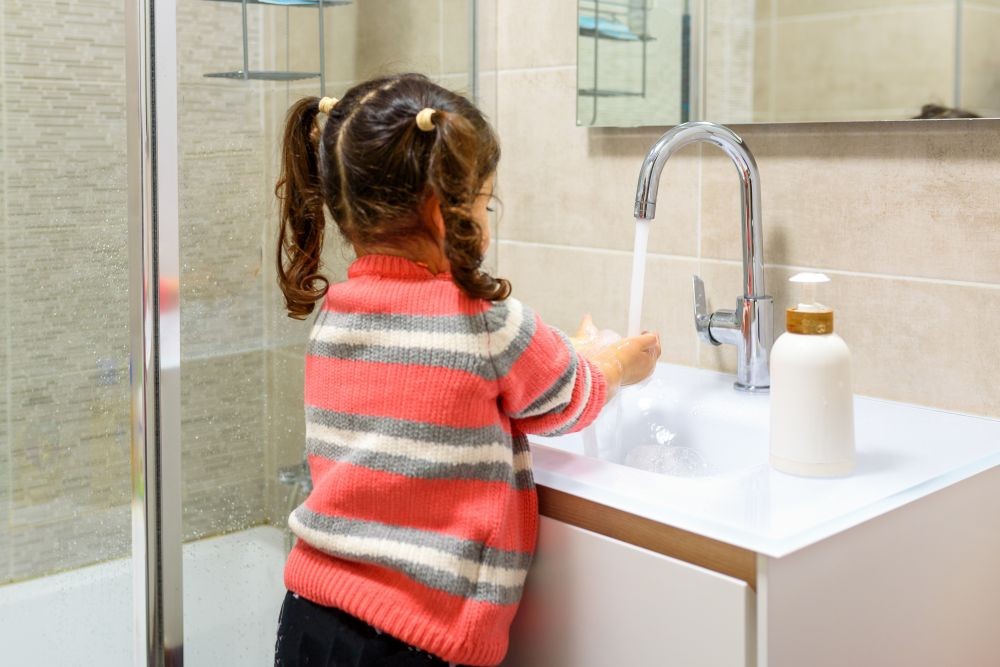
    • Teach them to wash their hands with soap and water for at least 20 seconds, especially after blowing their nose, coughing, or sneezing; going to the bathroom; and before eating or preparing food.
    • If soap and water are not available, teach them to use hand sanitizer. Hand sanitizer should contain at least 60% alcohol. Supervise young children when they use hand sanitizer to prevent swallowing alcohol, especially in schools and childcare facilities.
    • Remind them to cough or sneeze into a tissue or their elbow, then throw the tissue into the trash.
    • Discuss any new actions that may be taken at school to help protect children and school staff.
      (e.g., increased handwashing, cancellation of events or activities)
    • Get children into a handwashing habit.

We greatly appreciate your support in implementing our safety measures and helping provide your children appropriate guidance and reassurance with this situation,

FMSL Admin.

Developing Empathy – Parenting Connection

I believe wholeheartedly that our children require a great deal of practice at becoming empathetic, compassionate, contributing members of society and that they deserve a great deal of support along the way.  Feelings can be SO BIG for kids and, in a world that thrives on immediate gratification, it can be hard to work through the “stuff” that comes with those big feelings. This wonderful article from Montessori Nature discusses the elements a child needs to learn to regulate their emotions at a young age.