Author: Alejandro Malespin

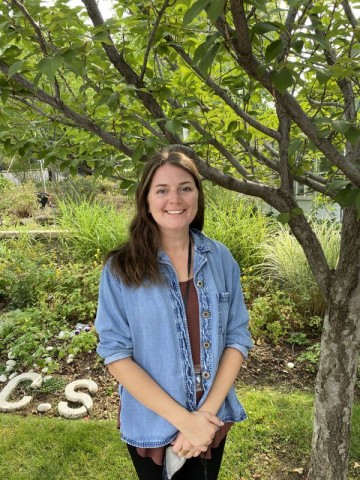
Introducing Amanda Bywaters

Please join us in welcoming Amanda to FMSL.
Amanda Bywaters joined us in 2021-22 as our Student Support Coordinator. During the first few weeks of this school year, Amanda will join each class, from infants to upper elementary, weekly to focus on Social/Emotional Learning lessons. You will get to read a snapshot of these lessons on Friday’s Montessori Compass activity reports. Amanda will continue to follow up and facilitate current and future Student Support Plans. 

Amanda is a native Oregonian and grew up in Lake Oswego, Oregon. She was fortunate to work in the school district she attended as a child and focused on the area of Special Education for the Lake Oswego School district for 17 years, even working with some of her former teachers.

Amanda, her husband and two children decided to change scenery and move to Utah in November 2020. As lovers of the outdoors, they are all thriving here. Going on family hikes, skiing, enjoying local farmers markets and exploring new places are their favorite things to do together. Amanda also enjoys photography, making jewelry and crafting.

Amanda is inspired by the Montessori philosophy and is excited to be part of the Montessori team.

International Day of Peace, 2021

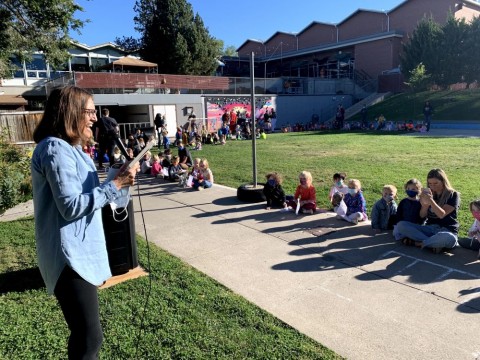
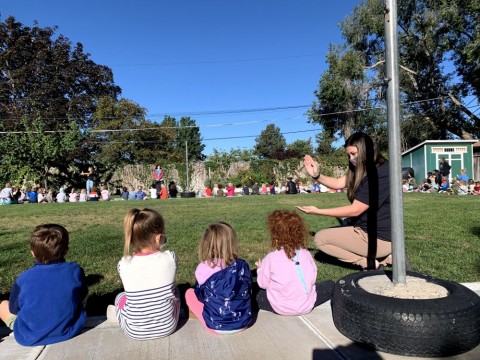
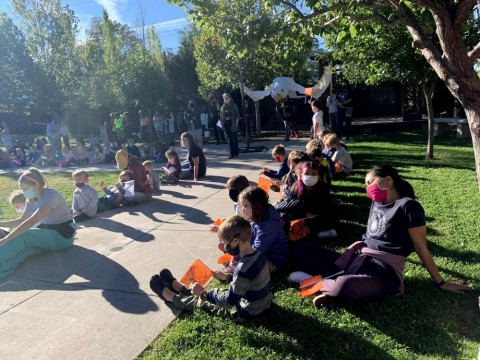
The International Day of Peace, sometimes unofficially known as World Peace Day, is observed annually on the 21st of September. It is dedicated to world peace and specifically the absence of war and violence. For a number of years now, FMSL has celebrated this important day.

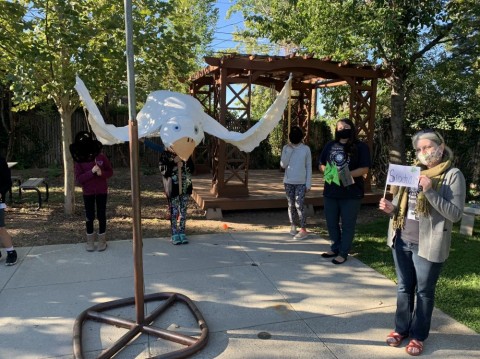
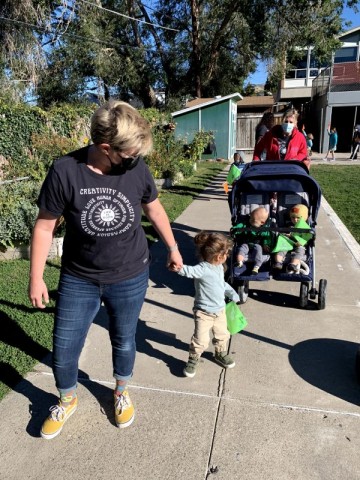
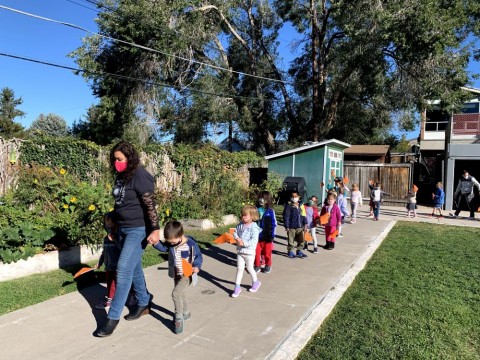
This year, in honor of International Day of Peace, our students and staff gathered on the field to celebrate together.  Jenn Carrino, a toddler teacher from Stars, spoke to us about peace and then we sang and signed Light a Candle for Peace.

The 6th years from Uinta carried the Peace Dove and led us on our Peace Walk.

We are honored to support Dr. Montessori in her desire to teach peace to children around the world.

Encouragment & Obstacles

The achievement belongs to the child.

The Encouragement of Eliminating Obstacles

by Edward Fidellow

The best encouragement you give is often the kind that is not seen – eliminating obstacles. This action is a hallmark of a Montessori education. Eliminating obstacles is not obvious – because you have removed them but it is essential for the amazing accomplishments that children achieve in a Montessori environment. To be clear, removing obstacles is not the same as doing the activity for the child. The achievement belongs to the child. Clearing the obstacles belongs to the adult.

The first obstacle is an environment that is not conducive to the child or their learning. A Montessori environment has everything in order for easy recognition for the child. The environment is child-sized, tables, chairs, shelves, bathrooms all accessible to the child without adult help or physical barriers. Obstacles can also be removed from home by placing everything the child needs at a level he/she can access. Plates, glasses, silverware can be located on a lower cabinet shelf. A small step stool can make the sink accessible. The same removal of obstacles can be achieved in bedrooms by installing low clothes racks and bottom drawers of dressers holding often worn clothing articles.

A second obstacle removed in a Montessori environment is the constant need of permission or direction. Once a child is introduced to an activity they are free to access it and work with it. This is also the beginning for the child to learn to make choices and make decisions instead of waiting to be told
what to do.

A third obstacle removed is the constant interruptions that plague a typical preschool. The ideal three hour work period fostered in a Montessori environment gives rise to the ability to concentrate. It gives rise to the ability to finish what you start. These are things that an adult cannot do for the child. These are skills that the child needs as an adult.

The fourth obstacle removed is not prohibiting social interaction and cooperation. Both are life-long assets and when learned young and practiced give great advantage to the child. However, you can’t remove the prohibition on socialization and cooperation without providing the necessary training for there to be benefits instead of deficits. Grace and courtesy is more than “please and thank you.” It is thoughtful consideration for those around you. Just as you provide an environment of concentration you also provide an environment of socialization where they work in tandem with one not intruding on the
other.

The fifth obstacle that a Montessori environment is good at removing is the negative – negative actions, negative words, negative attitudes, which unfortunately mostly belong to the adults. The training of the guide includes being careful with your words and your attitudes. Learning to be an effective Montessori guide requires you to dispense with the negative and enter into the world of “Yes.” It is not that you never use the word “no” but you frame it in a hopeful manner. “Can I do this?” asks a child. “Yes, but first we need to do this” (so you can succeed at what you are asking.) “Can I do this?” “Yes, maybe tomorrow.”

Clearing the obstacles belongs to the adult.

Removing the obstacles is an unseen work but vital to the success and well being of the child. Will there be failures for the child? Depends on how you define failure. “Do I get to do it again? “Yes! (until you succeed.)

International Day of Peace

“Averting war is the work of politicians; establishing peace is the work of educators.”

~Maria Montessori

Montessori’s peace education establishes a mindset and practice of advocacy, love, and respect. Dr. Maria Montessori was nominated for the Nobel Peace Prize on three different occasions. Her legacy lives on as she is now widely recognized as an advocate for peace and her educational philosophy is practiced throughout the world.

Montessori education addresses peace in a variety of ways, encouraging children to first develop inner peace. At its most basic level, the Montessori method does this by honoring the individual interests, passions and ability of each child; giving children space to develop confidence with making mistakes as they explore and the courage to fix mistakes; and inspiring them to be part of a community. Because each student is recognized as an individual, you will find children working on a variety of activities at any given time. This gives children space and encouragement to accept that differences between humans exist at varying degrees.

Inner peace gives children the foundation for supporting peace within their classroom, school, social and family communities. Communities are an important aspect of the Montessori philosophy in that there is an emphasis on the whole person and learning to function within a community is essential to the success of human endeavor. A successful community is made up of a variety of different talents, strengths, skills and goals. As our students engage in peaceful conflict resolution, modeled by the adults in the community, they learn to function as many parts making up a whole. As they assist in the management of the environment, including caring for the physical space, taking on important leadership roles within the classroom, and engaging in group discussion about how to make change for the better, students practice life long skills of considering others and building functioning communities.

Peace is at the center of the curriculum at FMSL. This month each of the classes is engaged in creating space for peace as we prepare to celebrate International Peace Day on September 21st. Studies show that a proactive curriculum that promotes communication, community and self-advocacy is more effective than a punishing approach to bullying in schools. Ours is an approach that we expect will follow our students far beyond their structured educational experience.

Promote Peace. Be Peace.

By honoring each individual and supporting children in becoming their most authentic, passionate, courageous and determined selves, we provide the world with a powerful force for change for the better.

“Peace is a goal that can only be attained through common accord, and the means to achieve this unity for peace are twofold: first, an immediate effort to resolve conflicts without recourse to violence—in other words, to prevent war—and second, a long-term effort to establish a lasting peace among men”

(Education and Peace, Montessori, 1949, p. 27).

May you all find inner peace and enjoy a most lovely day of celebrating the beauty and hope of mankind on this day set aside for celebrating peace on earth.

Featuring Student Work

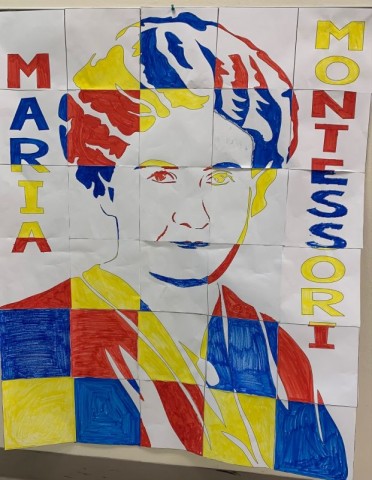
Collaborative work by 3yr students in Oquirrh

​3rd year students in Oquirrh collaborated to complete the separate squares of this art work. When finished they then assembled the individual pieces into this 100cm x120cm poster. Framing advice is appreciated.

Robyn’s Message to the Community-MEF Giving Projects

Each year we hold fundraisers, such as the Fun Run, in which our students participate, in order to earn money to go towards our Giving Projects. The funds are donated to Montessori Educational Foundation (M.E.F ), the non-profit arm of the school that currently is used exclusively for charitable purposes.

Project #1 Children Of Ethiopia Education Fund (COEEF)

For many years our school has been sponsoring young girls from Ethiopia, through the Children of Ethiopia Education Fund (COEEF), so that they are able to attend school; many girls in Ethiopia never have that opportunity.

We are currently supporting three girls:

Mariana (photo from 2021-22)
Betselot (photo from 2021-22)
Hana (photo from 2021-22)

Each year COEEF holds a Fundraiser. Last year some of our staff attended the event and loved the food and entertainment. Maya, our bookkeeper, even won a huge unicorn in the silent auction!

If you are able to attend this year’s event I know that you and your children will really enjoy the evening and perhaps you will find some wonderful items at the auctions.

Best wishes,

Robyn Eriwata-Buchanan

Becoming a Montessori Parent

There are seven simple steps to becoming a Montessori parent. When we say simple we don’t mean that they are not challenging. It is a lot like the definition of bull riding. “The object is to keep the bull between you and the ground.” Simple – but challenging.

The first step to becoming a Montessori parent took place when you enrolled your child in a Montessori program. That in itself is a challenge. Most of us weren’t raised in a Montessori school. The whole concept is foreign and takes a bit of courage to step out of the norm and our comfort zone. We may have chosen the program because it wasn’t like our school experience (which is why we chose it.) Or we chose it because we saw something unique in a Montessori child we knew. Or we were just plain lucky and stumbled on to a Montessori school and were fascinated by what we saw. Even then we had to deal with the question, “If this is so great, how come the whole world isn’t lined up outside the door to enroll?” (Which is the same question Montessorians keep wondering about too!) But you made a complex and challenging decision to become a Montessori parent. And here you are. So how do you get the best out of your decision? You go to step two.

You begin to understand the core philosophy of what Montessori is all about. Fortunately, you don’t have to become a Montessori teacher to be a good Montessori parent. (You don’t have to know how to manipulate all of those materials and you don’t have to keep fifteen children from climbing the walls.) The most significant Montessori concept is to respect the child. I can almost hear the wheels turning “Of course I respect my child, I love them very much that’s why I have them in Montessori, I want the best for them.” Of course you love them – but respect is different. Respecting the child is first, to respect the nature of children. Children are not mini adults waiting to be molded. They are like tadpoles and caterpillars that have their own form and function of life waiting to become what they are intended to be. We are often impatient for them to become because we don’t realize that childhood – with its curiosity, playfulness, messiness and all – is part of the process of them transforming themselves into the adults they will become. We have to respect that process – which doesn’t mean they always get to do what they want. One of the operative words in Dr. Montessori’s writing is the word “train”. We do need to train our children but we need to train ourselves “not to destroy that which is good” in the nature of our children. The second part of respect is to respect the personality of your child. Your child is not a blank slate. They are already imbued with the unique characteristics of who they are. The artistic bent is already there. The math bent is already formed. The leader, the follower, the giver, the taker, the extrovert, the introvert are already dna’d into your child. Right or left handed, right or left brained are already formed. So how do you cooperate with nature? You become an observer.

That is the next step in becoming a Montessori parent – you train yourself to observe. What does your child gravitate to? What gives them great joy? What occupies them endlessly? These are all clues to who your child is becoming. You are fortunate that you have a trained helper in your child’s Montessori teacher. Your next parent conference should ask more than what has she done but who do you see her becoming. It is hard to cooperate with nature if you are not aware of the nature of your child.

Our third step is to become their champion. I know. I hear you say, “Of course, I’m their champion. I love them.” And so you do. But are their goals your goals? Translation: Do you have goals for them that do not take into account who they are. (There are many jock fathers who do not have jock sons.) Yes, you have many wonderful goals for them to be caring and loving, honest and faithful, upright, truthful, etc – and these are worthy, significant and meaningful goals which they should attain to. But the expression of their lives – career, vocation, work – is best met and fulfilled according to their gifts. When your five year old says, “I want to be a fireman.” He may be reflecting the latest book or television program he’s seen. However, if you continue to ask the why questions, “Why do you think that would be a good job? Why do you think that you would enjoy that?” you may discover that your child is not drawn just to the excitement but to the fact of wanting to help people or he likes the aspect of being part of a team. All are important clues to his personality. Your child needs you to champion and encourage his personality (especially, if it is different than yours.)

The fourth step is to practice what they learn at school – grace and courtesy. Please and thank you, may I, excuse me, please forgive me and a host of other considerations practiced (and modeled) at home will go a long way to giving your child every advantage in life. People respond favorably to a child with great manners.

Fifth, practice independence. Independence is the ability to be self-governing and that comes from making choices, living with the consequences and having responsibilities. As often as possible give your children choices. “What do you want for breakfast, cereal or eggs?” “Do you want two spoonfuls of carrots or one?” (Don’t offer choices where there are no choices. “Do you want carrots? They say no and you serve them anyway.) Give your children chores they can accomplish – making their beds, putting dirty clothes in the laundry, dishes in the dishwasher, etc. Chores build responsibility; responsibility builds independence; independence builds confidence.

Sixth, give them the gift of time. Give them time to accomplish their chores. Give them time to be children. Give them time to breathe. Give them your time.

Seventh, practice humility. They have a lot to learn from you. What is easy for you as an adult is mystifying and beyond challenging for them. Let your words be seasoned with grace. Look for the good in what they do. Their motives are often pure; their actions imperfect. Yet, we have a lot to learn from them also. And when you are wrong (when, not if) practice the humility of saying, “Please forgive me.” It will not destroy your authority or their respect for you. It will teach them one of the great lessons of life – when you fail, whether it’s in a relationship, school, career or life – own the failure and start over again – to succeed another day.

Becoming a Montessori parent is to become the best parent you can be.

-Edward Fidellow
We are Accreditated!

Congratulations! Foothill Montessori of Salt Lake has been awarded Accreditation at Full Accreditation Status by the International Montessori Council and is now a part of a global network of accredited Montessori schools. This action was taken by the IMC Board of Trustees and the IMC Accreditation Commision on February 18, 2021.

Throughout the term of accreditation, Foothill Montessori of Salt Lake must continue to adhere to the IMC Code of Ethics and the IMC Accreditation Standards to maintain the accreditation status as outlined in the IMC School Accreditation Handbook. Your accreditation signifies your commitment in pursuit of educational excellence and best practice in Montessori. You can take pride in your achievement and so can your school community. Your school has completed a rigorous accreditation process that fully encompasses the principles and philosophy of Montessori Education.

You have received the Final Report, which includes commendations, recommendations and required actions. As a formative tool for improvement, it pinpoints areas of success as well as areas in need of support and / or focus. Your responses to those recommendations in your annual report will serve as a guide for you and your community to focus your attention, effort and actions, which will result in a positive impact and measurable outcomes specifically designed to improve the overall education experience at Foothill Montessori of Salt Lake. As your school accomplishes and documents each change, the recommendations will guide you in future actions and endeavors.
As an accredited institution, you are a part of a community of Montessori schools around the world dedicated to collaboration, support, growth and improvement through accreditation. The IMC offers a range of services for schools that are planning to engage or are engaged in the accreditation process. Please share your experiences with schools that you feel would be a wonderful fit for IMC Accreditation. In addition, helping as a mentor school for new schools in the process provides an avenue for you to share your knowledge and kindness. Always remember at IMC we are here to listen, support and help your school – just reach out.

Sincerely,
Sheila Linville
Sheila Linville
IMC Director Of School Accreditation

Separation Anxiety is Normal

Time for a deep breath

Welcome Back! School is officially in session. As excited as we all might be about school starting it can be difficult for you and/or your child to say goodbye in the mornings. Don’t be surprised if your child is having a difficult time even if they are returning to the same classroom, with the same teachers, and the same peers. Separation anxiety is normal and we would like to offer some tips that might be helpful…

Prepare your child. Be sure to help them understand what they can expect. Talk about how the routine will go… “We will walk to entrance. A teacher will meet us there and I will give one hug, one kiss and one high five and then I will leave.” Stick to your routine. A change in routine can make separation anxiety even more intense for a child. If you say you are going to give one hug, one kiss and one high five, DO IT! Drawing out the goodbye not only makes it hard but also hinders your child’s ability to develop confidence that you are both really expected to do what you say.

Stay calm and let your child know you trust them. Although you might be concerned that your child is going to have a hard transition, be sure to express your confidence in them. You are welcome to give us a call later in the day and we will be happy to check on how they are doing for you. Rest assured that if your child is unable to settle or remains distraught, we will call you. It is important to us that your child feels this is a safe and peaceful place. If they need a shorter day here in order to build that confidence, we will support them.

Return on time. It can be difficult for children to build trust if their parent and/or teacher tell them that mommy or daddy will “be here soon” and you are not. If you are going to be late, give us a call so we can prepare your child. Unexpected events occur and we are happy to support you and your child so call our office if you are running late.

Give it time. It can take up to 6 weeks for children to “normalize.” If you have concerns that it is taking your child too long to adjust, be sure to speak with the teachers. They might have some good ideas to help you both. Ask your child about their day. Let them express frustrations but also ask specific questions that might lead them to remember the good parts of their day. “Did you play in the sandbox today?” “Did your teacher read any stories today? What was the story about?”

Most importantly – be consistent!

We are so happy that you have entrusted us with your precious children. We look forward to a wonderful year and invite you to reach out if you have any questions or concerns

Welcome to 2021-22

Dear FMSL community,

Brandi and I are delighted to welcome you to the 2021-2022 academic year. We are looking forward to meeting our new students and their parents as well as seeing all of our returning families. This is year 36 of FMSL! It brings us great pleasure and pride to have an amazing community to partner with so as to be able to continue Robyn’s dream of excellence in Montessori education.

Each year our staff has a theme that helps provide focus for our work. This year’s theme is Ubuntu. Ubuntu can best be described as an African philosophy that places emphasis on “being self through others”. It is a form of humanism which can be expressed in the phrase, “I am because of who we all are”. We have seen this belief manifest this week in the work the staff have done to prepare the classrooms, the school and their teams for the children. We want to extend our gratitude to each of them for the care and attention they have put into making FMSL a warm, beautiful and safe space for all.

The pandemic continues to require us to be vigilant. Everyone’s risk tolerance is different and we respectfully remind our community that this requires sensitivity and respect. We look forward to everyone’s careful adherence to the school’s COVID-19 policies and protocols as they are designed to keep our community safe and healthy.

A new year brings new opportunities and we are feeling optimistic about the future. Please don’t hesitate to reach out should you have questions.

With gratitude,

Brandi & Margaret

Welcome Back!