Author: Joshi Haskell

Silent Journey and Discovery

is coming up next Saturday, November 9th from 9:00am to 1:00pm.
Sign up in the office, space is limited.
Attendance is free of charge, brunch will be served &
child care will be provided to those who sign up in advance.

Join us to experience our classrooms, from Toddlers through Middle School, to see for yourself how the lessons learned in our early programs set the tone and lay important foundations for later learning. This is a wonderful opportunity to gain a sense of how the Cosmic Montessori Curriculum unfolds for the child.

Read about some parents experience of the Silent Journey and Discovery from previous years:

Having not grown up in a Montessori environment, it has been difficult for me to understand what exactly a day in the life of my Montessori students is like. I try to take in as much as I can at pick-up and drop-off, with the occasional visit and guided lesson by my children, but there is no way to fully understand without an experience like the Silent Journey and Discovery. It was an eye-opening voyage that I would recommend for every parent, and prospective parent. I want to do it again.

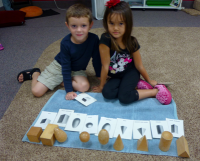
Going through a classroom from each cycle really makes the whole Montessori experience come full circle from seeing how the Toddlers get their first understanding of space and shape, to Early Childhood and their practical life lessons, to Lower Elementary and their grammar materials which encourage socialization, to the Upper Elementary complex math problems, to a Middle School student-led Socratic discussion. We only saw the tip of the iceberg, but the hands-on learning experience helped personify the school life of our children. I was struck by the thoughtful organization of each room; how comfortable and serene a small space can feel.

I also enjoyed the roundtable discussion following our classroom journeys. We were able to get some insight from teachers, staff, students and other parents. Because Montessori isn’t the “traditional” schooling for kids in our country, there are obvious concerns and hesitations with going outside the “norm”. Many of my concerns were put to ease and I feel my children are on the correct path for them at this time. I appreciated the book recommendations and feel they will help in understanding the Montessori Method and perhaps assist me with decisions for my family down the road.

My kids have been at MCS for three/four years now and I feel like I have finally been able to look beyond the curtain of their daily journey, something that every parent should see and experience. Now, when my kids and I have our chats at the end of the day, I can ask even more detailed questions and have a bit more understanding as to how their day went. That is priceless.

Thanks again to all who helped facilitate the Silent Journey and Discovery.

-Carrie Christensen, mother to Lucas and Emily

The Silent Journey and Discovery was a very emotional and powerful experience for me. I did not attend a Montessori school as a child so I am only familiar with the Montessori philosophy through what I have read and observed in the last two years. It gave me a great appreciation and understanding of the different developmental levels of the works. I loved seeing the progression and advancement of the works through Toddler, Early Childhood and up through Middle School. The grammar and math works were thrilling to learn and experience. The focus on the sensorial aspects of each work creates a love of learning. In addition to receiving an amazing education the students are also learning how to be independent, respectful and loving human beings. I think every MCS parent should participate in the Silent Journey and Discovery to really understand and appreciate the experience and education we are giving our children. I know that it made me realize that I will do everything in my power to continue my daughter’s Montessori education.

-Tonia Hashimoto, mother to Savvy Williams

The Outdoor Classroom – An Education in Nature

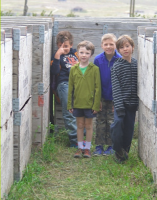
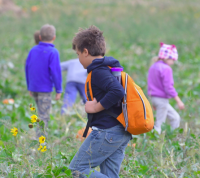
The Outdoor Classroom is a program that has been with the school for over seven years, and was conceived and developed by Ms. Donda Hartfield. This program is unique to our school, and gives our students a way to connect to their natural environment in a meaningful and expressive way. Spanning around the North- East corner of the school, our Outdoor Classroom is a beautiful natural trail, with gorgeous wildflowers, Utah-native plants, trees and geological treasures. The school also hosts a natural amphitheater, where Ms. Donda gives lessons and instructions before the children are free to explore on their own.

Through activities, lessons and especially time set aside to spend within the natural environment, our children learn about their world and it’s beauty. They come to understand the fragility of a plant, the necessity of a flower, the purpose of a bee. Miss Donda has enjoyed many years of her students’ discoveries, and she shares with us her teaching experience:

“When a student makes references such as, ‘The leaves of the California poppy look like reindeer antlers’ or, ‘I found a see-through plant’ I can celebrate that these students are taking time to observe their natural environment closely and therefore, they are learning about natural nuances and details that make our world uniquely beautiful and effective.” She continues by saying: “When a student shows deep concern for a tree that has string tied to its branches for bird-feeder ornaments because ‘It might be pulling down on the branches,’ I know I can trust that she is learning to care for her environment.” “It is through these kinds of observations that I can smile and know that these students are appreciating and relating with their surroundings in a memorable way.”

It was a great pleasure to attend the first Early Childhood lesson on “Land.” Miss Donda said to the children: “Look under your feet- you will see the land.” “I am standing on the land, you are standing on the land.” Her lesson reflected the great importance of the land. The children were able to dig holes in the soil together, but were asked to then fill the hole back up. There lies a genuine metaphor here: if you use the land, you must return it. The children might not know at such a young age what they are cultivating by their participation, but they are becoming considerate and thoughtful citizens of our remarkable planet Earth. Just as the Montessori Classroom places great trust in the hands-on learning process, so does the Outdoor Classroom program at MCS. The children learn through what they are able to see, touch and smell, and through the rare feeling of human freedom that one gets from living presently in nature.

Miss Donda tells us: “There is so much to be gained from simply engaging in our natural environment. And by engaging, I don’t mean necessarily hiking up to the summit of a mountain. Engaging is truly listening and looking at the landscape, the rivers, the trees and plants, the sounds of the birds and the passing of the clouds. Engaging is attending to our own naturalness through the breeze and the movement of the leaves, as well as the rise and fall of your own breathing and the subtle, yet profound connection between the two.

Children of Ethiopia Education Fund

The Children of Ethiopia Education Fund, or COEEF, is a Utah-based organization that provides crucial access to materials, uniforms and an absolutely vital private education to many children in Ethiopia. Fiercely dedicated to the protection and instruction of young girls, COEEF provides a new kind of life in an otherwise perilous, sexist, underprivileged and poverty-driven region of the world. We share the mission of this organization as we mark our 6th year of support to such a pivotal duty of the world’s edification. COEEF takes its place in the school within our Service Learning Program, a program designed to give our students a channel to ignite character, build trust and connect with others through acts of true service.

COEEF was created by a local SLC couple: Norm and Ruthann Perdue, when they traveled to the country with a humanitarian mission. During their service, they learned of the great educational disparity in the upbringing of an Ethiopian child: with classrooms crowded, unfinished and ill-prepared. At the time, less than half of all Ethiopian citizens were able to read, and only half of all Ethiopian children had the opportunity to attend school. The two saw an immediate need for assistance, and they began working on a plan to improve these conditions.

While in Ethiopia, they learned of a child, 12 year old Kidest, whose father had died and whose mother had abandoned her shortly after, unable to manage under the strain of raising her alone. Kidest had been adopted by her grandmother, who managed to send her to a private school, the “Ethiopian Adventist College” with the mere wage that was paid to a hard-labor employee of the school. When Ruthann and Norm became aware of this situation, they connected with Kidest’s grandmother and found her bereft in her struggle to finance her granddaughter’s education. In her old age, she suffered physical fatigue, and she expressed that she did not know how much longer she could go on working to support Kidest in her pursuit of higher education.

This sadness would soon turn to joy, as after hearing her story, Norm and Ruthann decided that they would share some of the burden. They made a request to the school and discovered that for a donation of two-hundred dollars, they would be able to finance the girl’s yearly tuition, supplies and school uniform. This act of generosity would make them the first sponsors of the Children of Ethiopia Education Fund. When they returned to their home in Salt Lake City, they shared their story with everyone who would listen; and by 2001, they had convinced enough of their associates to become involved that they would return to Ethiopia to enroll 30 children in private education institutions. Shortly following this exceptional milestone, COEEF appointed a board of directors and was officially incorporated as a non-profit organization.

Participation and arranged donations in support of the COEEF service program are available to all MCS parents, students and volunteers. Our school is responsible for the education of 7 young girls and we seek to make the greatest contribution we are able to this established purpose. By raising money during our Annual Spring FunRun, our students help us finance this commitment, and everyone is able to share in the excitement of giving an immeasurable gift.

It is said, “Educate a woman and you will educate a nation.” We are proud to be continued sponsors of COEEF and we intend to remain loyal in our stewardship.

* At this time, COEEF is collecting school supplies materials for the children they support in Ethiopia. If you or your child are interested in donating to this season’s care package, please drop off your donation at our front office and their delivery will be arranged to COEEF headquarters before humanitarian representatives travel to Ethiopia in early October. If you are interested in making a personal donation to COEEF, or becoming a child’s sponsor, we recognize you and invite you to visit the COEEF website to arrange for your own stewardship.

Upper Elementary – Introducing: “Uinta”

The Upper Elementary program is an essential piece of the complete Montessori education design. During the Early Childhood years and Lower Elementary years, students are learning through their hands-on materials and environmental experience, but as they approach the second developmental stage, they enter a more abstract process of cognitive learning and memory. Upper Elementary is the next step; it is a program which serves the child in his reach for a more complex intelligence. The UE program incorporates many areas of interest, including advanced literacy, cultural and historical studies, mathematical applications, core sciences, service, and applied life skills. The program invests in the child with regard to individual study habits, identifying personal strengths, developing and following core values and creating a sense of true community within school boundaries and beyond.
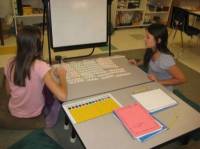
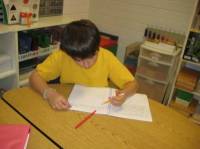
 

Language is a principal focus of the Upper Elementary program. The students learn through prepared lessons on vocabulary, grammar and word study; and are able to practice with Montessori prepared materials such as the Parsing Symbols, Sentence Analysis Charts and Synonym Matching cards. Students learn through their engagement in independent reading, journal and report writing and prepared oral speech. Group reading and literary analysis on written style, genre and technique provide students the opportunity to develop their own spoken language through impassioned discussion and group collaboration. Practiced writing skills are put to use each year as students select and promote campaigns for school improvement; this process allows for students to exercise responsibility and social awareness within their own environment.
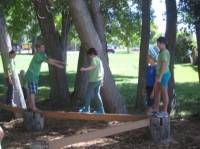
The science curriculum for Upper Elementary has been tremendously influenced by weekly excursions hosted by the “Great Outdoors” program. As a core resource to our students, the programs allows students to study through field trip experiences to local ecosystems on hikes, day trips and expeditions. This program combines classroom and field studies through observation of local biomes and water systems, and participates in environmentally conscious service projects throughout the year. As Miss Amy tells us, the UE students have recently been studying the hydrosphere, which has included experiments that investigate the water cycle (making clouds and watching plants transpire), water as a resource (making our own mini-well and water wheels), and learning about water’s physical and chemical properties (performing pH tests and learning about density). In the Great Outdoors program, they have kicked off the year studying watersheds by exploring the high places and learning about headwaters, what defines a watershed, and learning how to map out an area. Together, they have explored many beautiful places in rain, sun and hail, such as Bloods Lake (Guardsman Pass), Provo River Falls (Uinta Mountains), and Silver Lake (Big Cottonwood Canyon).

With a class culture geared toward service, the students participate in many programs that enhance the spirit of their home community. In light of a school-wide study on watersheds, the “GO” program recently adopted a segment of the Jordan River, which students help maintain and keep healthy in their bi-annual visits. Upper Elementary students are also responsible for the school’s recycling campaign, for which they collect, manage and deposit all recyclable materials on a daily basis. UE students also participate in the school’s fundraising efforts and events to support our COEEF (Children of Ethiopia Education Fund) stewardship, and our Navajo Grandmothers within our Adopt A Native Elder program.
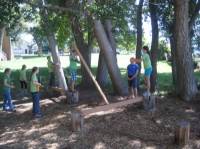
The Upper Elementary students have been collaborating for the last few weeks, and are proud to be the titleholders of a new class name. Through a collective process and much deliberation, they have selected ‘Uinta’ to be representative of their class study and culture. Unique to Utah, The Uinta mountain range is the tallest in Utah, with Kings Peak being the highest point of our state. Our Upper Elementary students are well paired for such a title, as they hold themselves to a high standard in academics; but also in personal integrity, responsibility and proactive service. The Uinta class is diligent, with collaboration and dedication being key concepts in the success of the overall class. We are looking forward to another year of excellence in Upper Elementary.

The “Six Pillars” of the Middle School Program Explained

The Middle School program offers a highly advanced preparatory experience for both High School and for the child’s emergence into adulthood. As part of the third developmental plane, the youth of our Middle school seek to realize their place in a school society and their community at large. Driven by challenge, the Middle School student is at an age of empowerment- he or she is looking for a platform to invest acquired knowledge and individual talents in order to improve his own condition and strengthen his community. To meet his ambition, the Middle School student seeks out opportunities to advance his intellectual capacity and apply it to life.

The Montessori Secondary program is built on the “Six Pillars” [Paul Epstein] which are designed to serve the needs of the child in their third developmental plane. These are: self expression, trust, cognitive growth, commitment, responsibility and gender identity. These pillars are integrated through an intense curriculum presented to the Middle School student through themed study cycles. This six-week cycle begins with a study period that lasts about four weeks, allowing the MS student to identify effective personal study habits and analytical processing skills. The fifth week is meant to give the student an opportunity to self-evaluate, which provides an introduction to the practical life exercise of test-taking. This week is meant for the MS student to examine personal performance, observe skill mastery and identify curriculum areas where further study or practice is needed. The sixth week, or “Immersion Week,” involves the student’s ability to spread their intellectual wings. It could be planning a trip to a National Park, attending a career-building conference, or visiting a historic site- it is the MS student’s opportunity to integrate subject material from weeks past and process it through experience.

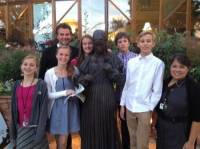
This week, the Middle School headed to Cedar City for a visit to the renowned “Shakespearean Festival.” During their Immersion Week, they have been attending plays, holding class workshops, and practicing performance techniques with a theater expert, Jake Johnson. In addition, they were also able to visit a national monument, Cedar Breaks for a few pictures. For the trip, they planned their event schedule, budgeted for every meal, and took turns cooking for each other. Here we have a few pictures of the Middle School students during their time in Cedar City:


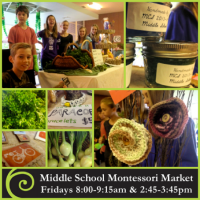
The program at a glance features a staggering course of study in all areas, but especially in that of Literature, Science, Practical Life and Economics. In Literature, the Middle School student has the opportunity to study traditional language and build vocabulary; she will practice grammar and learn the organization of professional writing as well as the authenticity and resourcefulness of creative writing. In Science, the MS student learns to identify the properties of cells, the structure of matter, the Earth’s Lithosphere and plant classification. These principles become solidified as students engage side-by-side in natural hikes, outdoor surveillance and community gardening. Practical Life and Economics seem to go hand in hand for the Middle School student, as with each new learning cycle, the class takes on a new “business venture” in order to raise money for a year-end Historic trip to Boston. These ventures include the refinement of skills such as gardening or cooking which are applied to the turning of a profit. Unique to Middle School, students participate in a weekly “Montessori Market,” for which they prepare and sell home-made items and natural goods. For these ventures, the MS student keeps accounting records, develops marketing tactics and principles of design, and practices negotiation strategy.


Not only are students of the Middle School immersed in the academic, but they grow on a different level through their study of guitar and music, outdoor appreciation and yoga. As the MS student is fast becoming an increasingly social being, much time is spent together through community learning and building. This group learning allows the practice of effective communication, positive relationships and skill building. What evolves is a respectful and diplomatic environment, with ambitious, forward-thinking leaders who seek to improve the world in their own way.


Lower Elementary – The Age of Collaboration

The Lower Elementary years are dedicated to the construction of abstract concepts through classroom exploration and individual discovery. As our students advance from Early Childhood, they are ready to take on a more theoretical approach to learning, with the curiosity to question and the imagination to find their own answers. Unlike the Early Childhood environment, where children are introduced to small concepts that gradually evolve into larger ideas, Lower Elementary students assume major theories, and from there they are able to explore the individual concepts that make up a larger framework.

The Lower Elementary curriculum features a classic sequence developed by Maria Montessori during her exploration of these years, titled: “The Five Great Lessons.” As one of the most important and unique curriculum developments of the Montessori design, the Five Great Lessons tell the story of the Universe, the Earth and life on Earth. In succession, these lessons incorporate the following themes: The Elemental Story of the Universe, The Timeline of Life, The Story of Civilization, The Story of Language and The Story of Numbers. As a believer in the child’s ability to progress humanity, the Five Great Lessons teach peace and tolerance. These lessons are presented every Friday to our Lower Elementary students, and can serve as a reference for virtually all other forms of discovery and learning.

As a socially sensitive period, elementary children are looking for a place of their own within the classroom and within a group. Through her observations, Maria Montessori discovered that as children arrive at the second plane of development, they develop a great thirst for social interaction and growth. It is because of this innate thirst that the Lower Elementary students are often given the opportunity to work in groups. Group work fosters communication, collaboration and the habit of contribution. Through friendship and shared interests, children find their capacity to belong.


Lower Elementary truly is an explosive intellectual period, with great focus on human civilization, language and fundamental scientific principles; these are the subjects that guide each student through a journey of discovery. It is a discovery of earth, and the story of our race; and it is through these years of exploration that the elementary student will gain an appreciation for diversity and human heritage, and then find joy in becoming their own person.


A Closer Look at our Early Childhood Program

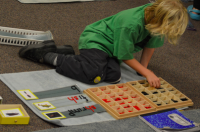
The Early Childhood classroom is made up of several major components which construct the foundation for a Montessori education, the first of which is the Prepared Environment.  Doctor Montessori said: “Education is a natural process carried out by the child and is not acquired by listening to words but by experiences in the environment. ”  A prepared environment refers not only to carefully selected materials set about a well-organized classroom, but to a lively and a passionate space, dedicated to the child in love and gratitude.  Peace and order are essential to the classroom, as is respect for the success of each individual learner.  The teacher becomes the essential link in this carefully prepared framework, as she provides a crucial connection between the child and the environment which will deliver his true self.
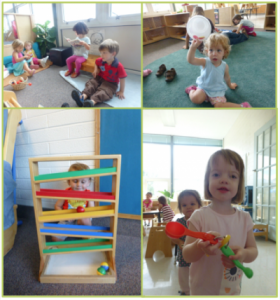
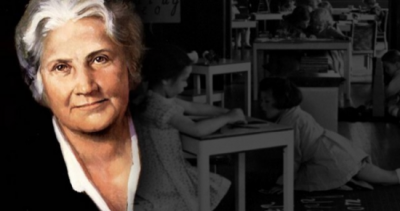
A second component of the Early Childhood Montessori classroom environment is the mixed-age group model.  The assembly of this division is in line with Dr. Montessori’s research on what she called the four planes of development.  This becomes a great benefit to each child, and it is due to the model’s dependence on the principle of imitation.  Children learn by example, so we can attest.  What is it about the multi-aged classrooms that benefit both the younger and the older child?  It is a unique opportunity to seek out answers in an experienced and collaborative group of community learners.  The younger students learn as they go, they grow gradually more accustomed to the culture and expectations of their class society, while at the same time developing their concentration skills.  The students in their second year practice learned concepts and develop greater intellectual and social aptitude.  The older students truly become leaders, remarkably responsible and well-prepared to impart their own understanding to a younger child.  This creatively established education model allows the child and their peers another strategic avenue to take on challenge.

These components serve the great development of Maria Montessori’s discovery of “The Absorbent Mind.”  This, we know is the child’s own capacity.  It is an intellectual capacity, but it incorporates an emotional, physical and social intelligence.  In the Early Childhood years, it becomes a conscious acceptance of one’s own environment, in which the child takes in, or “absorbs” what they need, and in fact a great deal more, to survive.  The Absorbent Mind involves each child’s potential to understand the complexities and qualities of their own world.

Competency is learned, and confidence is earned.  It is the child’s choice to truly become a Montessori learner.  It is the purpose of our work to lay the foundation, where a child may develop within their own character, with reason and grace.  The children we serve are brave, intelligent and generous on their own accord; however it is by the spectacular design of our own Maria Montessori, that they make themselves independent.

By Kellie Gibson, September 5, 2013

Welcome to the Toddler Environment

This year, our teeny Toddlers from our Suns, Moons and Stars classes are making great strides in a school-wide practice of “Grace & Courtesy.” Our Toddlers are learning some of the most important life lessons of all, and that is how to be thoughtful of our friends and those we love. Grace and Courtesy are learned through sharing a toy, taking turns on the slide, and being patient while a friend finishes a special work. These lessons are also incorporated during lunch and snack time when children say “Please” and “Thank you” or “No, Thank you” while practicing table manners. There are so many opportunities to exercise the principals of Grace and Courtesy both at home and at school, and we encourage parents to practice with their children.
image

As we settle into a new school year, our Toddlers are learning to adapt to new environments. Being away from Mom and Dad can be tough at their tender age, but our teachers are working with the young ones to help them become comfortable at drop-off time. Currently, our Toddlers are learning about their school environment, in the classroom and on the playground. They are having fun with the new materials that our teachers have set out for the new school year. Our Toddlers are also learning friends’ names this week, with songs from our wonderful teachers.

A health update on our friend Nico- He was delayed in his intensive chemotherapy, because his blood count was too low. As of a few days ago, Nico was back on the regime and all is going well. His parents, Jeff and Shannon are hoping that he will have completed this series within a month from now. We are all hoping that Nico can come back to school sometime in October. Get well, Nico!

Written by Kellie Gibson, August 30, 2013

A Farewell from Robyn & Ramira

A parent recently brought to our attention an article in Slate magazine about preschools. The article (read here) explores the question of whether preschools really give children an advantage in life. In an interesting reference to Montessori, the author cites Angeline Lillard’s research, which finds that “classical” Montessori programs–those that follow the mixed-age groupings, do not perform testing, and mainly present concepts with hands-on Montessori materials–do provide an advantage, more so than “supplemented” Montessori programs, which can segregate by age and mix traditional Montessori materials with activities like pretend play and direct instruction. Children in the classical Montessori program “exhibited better working memory, planning, reading, and vocabulary skills, and they displayed a better understanding of fairness and willingness to share.”

Hearing about this article now seems appropriate, as we are continually assessing ourselves in an effort to remain as authentic to Montessori’s vision as possible.  In 2012-2013 we have been excited about various projects and activities that promote this goal:

We sent four teachers–Lara Althouse and Evi Bybee from Early Childhood and Bonnie Bracken and Brandi Allen from Lower Elementary–to the new AMS (American Montessori Society) Montessori teaching credential  program at Westminster, which began last summer. While they already had one Montessori certification, each teacher chose to pursue further education by working towards an AMS certification. They will be doing their practicum in their classrooms in 2013-2014. Kate Savage is currently finishing her two-year training with the Center for Guided Montessori Studies. She will be doing her onsite training in Louisiana in June and is sitting her final exams later this summer. This summer Lauren Bornschein is beginning the Master’s in Montessori Education at Westminster, and two of our Toddler teachers are beginning their Infant/Toddler training with the Institute of Guided Studies out of South Carolina.  We are excited about these teachers’ training because having certified teachers is key to a “classical” Montessori program, as the teachers are the main observers and guides for the children’s progress.

In keeping with Maria Montessori’s emphasis on global education, and caring for the community beyond ourselves, we took Service Learning into the SLC community with Upper Elementary’s work with the Bicycle Collective and the Humane Society. Middle School students spent an entire immersion week on service projects of their choice, ranging from the Sarah Daft Home to Wasatch Community Garden and The Stable Place (for more on their immersion experience, click here. Lower Elementary students continued their service learning within the classroom and the school building, watering the school plants, cleaning their classroom and taking care of their classroom pets.

At the school wide level, we raised awareness about giving to others through the Fun Run.  Sadly, one of our Adopt a Native Elder grandmothers, Grandmother Roseline, died this year and after a relationship of seventeen years we will miss her greatly. The children raised over $6500 for the  Adopt a Native Elder and the Children of Ethiopia Education Fund (COEEF) organizations. We were so grateful for everyone’s efforts in supporting the seven young women who would not be able to attend school in Ethiopia without our assistance and in supporting our Navajo grandmothers, whom we have supported for seventeen years. Though the concept of raising money to give to others can be abstract,  in order for the children to feel more of a connection, we made a real effort this year to educate the students about the people the money they raised would go to. Our contributions make such a profound difference in all of their lives.

As an extension beyond our conscious, pre-planned efforts to involve the community in service learning, the community, particularly those involved with Toddlers, came together to support Nico in many ways.  Many people took it upon themselves to plan and carry out special events to raise funds to assist his family. Ms. Sophie, one of our Moons class teachers played a pivotal role in the fundraising efforts. This was the perfect example to our students as they observed a need and saw the community come together to fulfill the need. Another example of this was when one of our families had some crippling financial needs this year. Many families in our school supported their Facebook appeal.

We have appreciated everyone’s patience as we spent the year developing our new website, which we plan to launch for the 2013-2014 academic year. The new website will have an updated Parent’s Center that will combine parent education resources with classroom updates. We are also excited to be adding an alumni section, which will allow past graduates to touch base and to let us know how they are doing. We plan to gather more information in general from our alumni about how they fared in the transition from Montessori to a non-Montessori environment.

As a school we set the goal this year of improving our communications, among teachers and with parents. We streamlined our weekly email newsletter, and encouraged families to refer to that one centralized location for all classroom and school announcements. We added a second set of narrative evaluations at the Toddler and Early Childhood levels in order to increase feedback parents receive from teachers. We continued having two sets of parent/teacher conferences and teacher office hours, when parents can come in with their questions about their children in the classroom.

Aimee Brewer has surpassed all our expectations in her role as a stellar PSA President this year and we are infinitely grateful. Though she maintains an extremely busy work and family schedule she brought her innovative ideas to our annual school/family events. We wish her and her family the best in their move to the East coast this summer; we will miss them all dearly.

We are so fortunate and grateful that Ann Beverly is stepping forward to take over the role of PSA President next year.  Ann was instrumental as the Chair in the Green Committee’s efforts this year, with extensive help from Jaymison Peterson. The Green Committee planned events such as the MCS Clothing Swap. They also initiated a school wide glass recycling collection on Wednesdays this year. We thank and appreciate them for their efforts in keeping our school “green.”

We also want to thank Stephanie Thatcher for her leadership with the LegoRobotics team this year. The Virtual Vikings took 8th out of 20th overall and earned an Honorable Mention from the judges at the Lego FIRST Regional Competition in January. We want to thank Stephanie for her time and dedication in continuing the program, and we look forward to the efforts of the Upper Elementary students next year.

We are so appreciative of all the parents who are generous with their time and energy.  A variety of people coming together to serve one another in multiple ways as we seek to nurture the whole child is the true essence of community.  Each of your individual efforts helps make our school unique.  Many, many thanks for your continued contributions. We would not have such a warm, giving and caring community without you.

We are delighted that most of you will be continuing this educational journey with us next year, and we look forward to an exciting and fulfilling year. For those who are leaving us at this time, we are thankful for having had the chance to walk the same path while you have been here and we wish you the best. Best wishes to all of you for a safe and happy summer, Robyn & Ramira       Robyn Eriwata-Buchanan Head of School   Ramira Alamilla Associate

MCS Continues Tradition of Celebration of International Peace Day with our Silent Peace Walk

In true Montessori form, the students of Montessori Community School celebrated the International Day of Peace today with our Silent Peace Walk.  The International Day of Peace, sometimes unofficially known as World Peace Day, is observed annually on the 21st of September. It is dedicated to world peace and specifically the absence of war and violence. The day was first celebrated in 1982, and is kept by many nations, political groups, military groups, and peoples. In 2013, for the first time, the Day was dedicated by the Secretary-General of the United Nations to peace education, an obvious key beginning to peace for our world’s future.

To inaugurate the day, the United Nations Peace Bell is rung at UN Headquarters in New York City. The bell is cast from coins donated by children from around the world, and was a gift from the United Nations Association of Japan. There is an inscription on the side of the bell that reads, “Long live absolute world peace”.

Maria Montessori is well known for her advocacy of peace education and was quoted saying, “Education is the best weapon for peace.” She was nominated three times (1949, 1950 and 1951) for the Nobel Peace Prize and her legacy lives in the hearts of Montessori Schools world-wide.

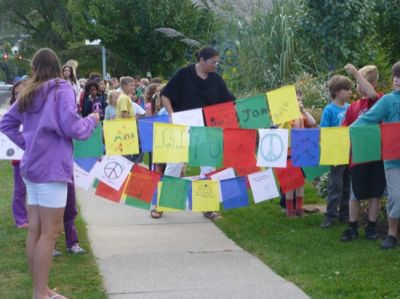
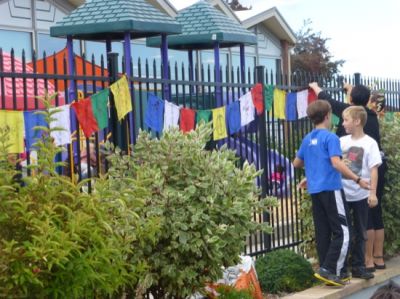
At Montessori Community School we relish the opportunity to begin each new school year with an emphasis on Peace. Our Peace Curriculum is a valued and dynamic piece to our authentic Montessori curriculum.  This year, in honor of International Day of Peace, our students and staff decorated prayer flags and then walked peacefully as a community around our campus and to the front of the school where the flags were hung to show the larger Utah community our continued commitment to inner, community, and world peace.

Students at Montessori Community School begin early on learning the tools for finding personal peace and the value of peaceful relationships when they are given a lesson on the use of a “peace table.”  The peace table or shelf is an area in the classroom where books and pictures are found that educate the child, at the appropriate age level, about peace educators and other aspects that support their personal education.  Oftentimes, you will also find activities that allow a child to turn inside themselves and teach meditation.  Students also learn about peaceful conflict resolution.  This is taught throughout our Grace and Courtesy lessons as children learn by example, are introduced to objects that act as a “talking stick”, and discussion is supported in class meetings.

We are honored to support Montessori in her desire to teach peace to children around the world and hope you will take the time to view the peace flags created by our students and staff that will remain on our campus.

“Averting war is the work of politicians; establishing peace is the work of education.”Maria Montessori